Beyond the Classroom: How Educational Travel to Tra Vinh Transforms Student Learning
- Why Trà Vinh? Understanding the Educational Goldmine
- From Observation to Transformation: The Learning Journey
- Real Learning Outcomes: What Students Gain
- The Scivi Approach: Intentional Design for Maximum Impact
- Beyond Individual Transformation: Ripple Effects
- Looking Forward: Education for an Uncertain World
- Ready to Transform Your Students' Learning?
In an age where students can access virtually any information with a few taps on their smartphones, educators face a compelling question: How do we move beyond rote memorization and passive learning to cultivate the critical thinkers, empathetic global citizens, and culturally aware leaders our world desperately needs?
The answer lies not in another textbook or digital platform, but in the transformative power of educational travel that places students directly into the heart of living cultures, complex ecosystems, and authentic human connections.
At Scivi Travel, we've witnessed firsthand how carefully designed field experiences can ignite curiosity, challenge assumptions, and create those unforgettable "aha" moments that reshape how young people see themselves and the world around them. Our recent educational programs in Trà Vinh province have become a powerful case study in experiential learning done right.
Why Trà Vinh? Understanding the Educational Goldmine
Nestled in Vietnam's Mekong Delta, Trà Vinh offers something increasingly rare in our rapidly modernizing world: an authentic window into sustainable living, cultural diversity, and community resilience. This isn't a manufactured tourist experience or a sanitized cultural showcase. It's a living laboratory where students encounter real people navigating real challenges with creativity, dignity, and hope.
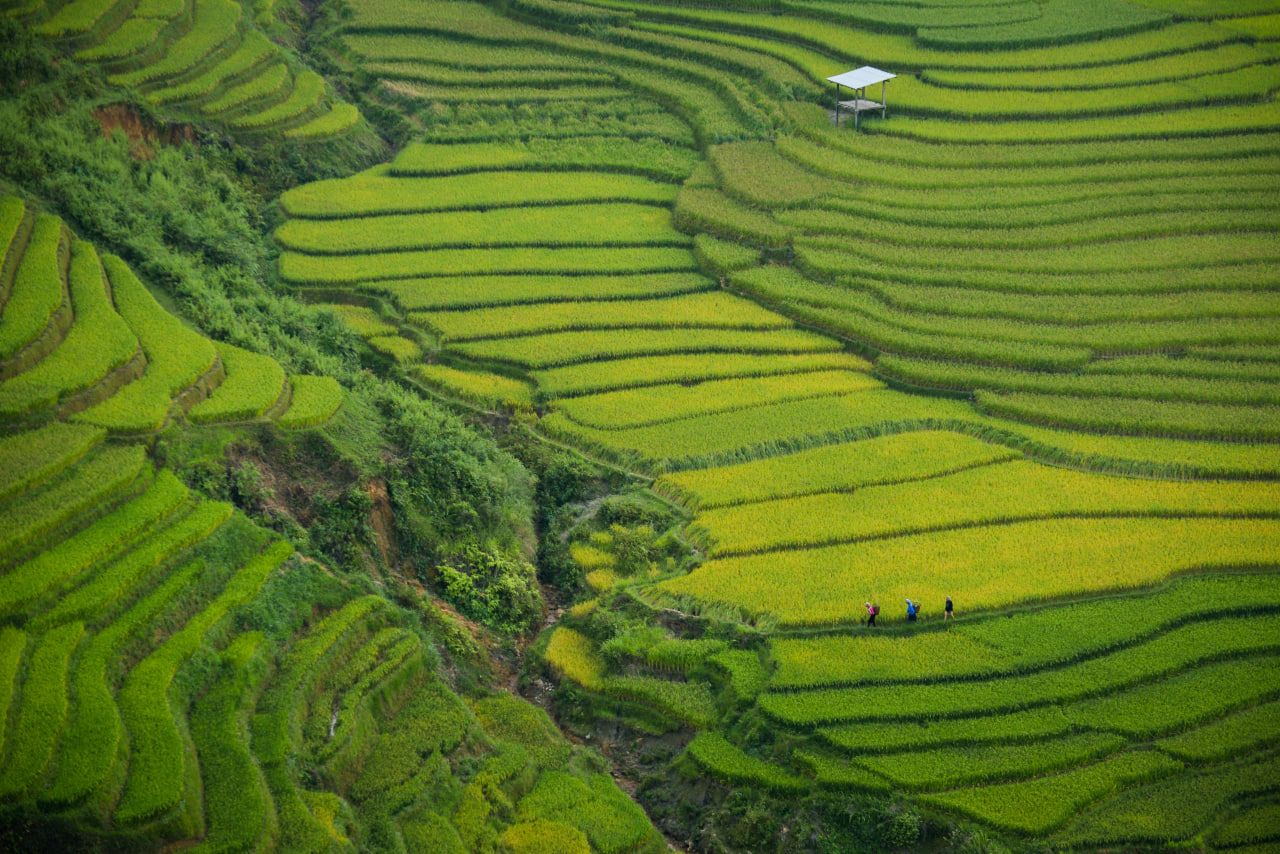
The province is home to a fascinating blend of Kinh (Vietnamese), Khmer, and Chinese communities, each maintaining distinct cultural practices while contributing to a vibrant multicultural tapestry. Rice paddies stretch to the horizon, coconut groves line rural waterways, and traditional crafts continue to thrive alongside modern industries. For students, Trà Vinh presents complexity without overwhelming chaos, accessibility without superficiality.
But what makes this destination truly exceptional for educational travel isn't just what's there—it's what happens when curious young minds engage with it.
From Observation to Transformation: The Learning Journey
Moving Beyond Tourist Gaze
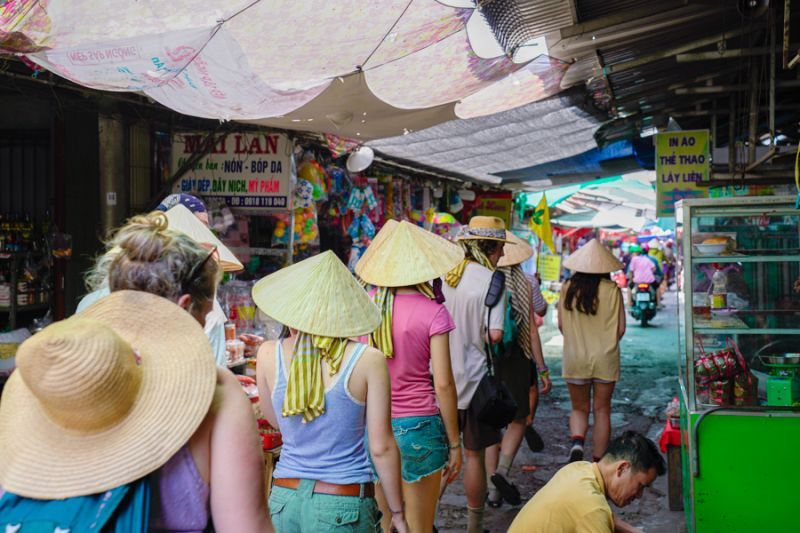
There's a critical difference between educational travel and tourism. Tourists observe from a distance, snap photos, and move on. Educational travelers engage, question, reflect, and grow. Our programs in Trà Vinh are intentionally structured to move students through increasingly deeper levels of engagement.
The journey begins with sensory immersion. Students arrive to the rhythmic sounds of temple bells, the earthy aroma of rice paddies, and the visual feast of pagoda architecture unlike anything they've seen before. These initial impressions aren't just pleasant experiences—they're cognitive disruptions that shake students out of their familiar frameworks and signal that different ways of seeing and being in the world exist.
But we don't stop there. Within hours, students transition from observation to interaction. They're not watching traditional mat weaving from behind a rope barrier—they're sitting alongside artisans, attempting the intricate techniques themselves, feeling their fingers fumble where skilled hands move with practiced grace. They're not reading about Khmer Buddhism in a textbook—they're conversing with monks about philosophy, mindfulness, and finding meaning in modern life.
This hands-on engagement serves multiple pedagogical purposes. It builds humility as students recognize the sophistication of knowledge systems they've never encountered. It cultivates respect as they witness the dedication required to master traditional crafts. And it sparks genuine curiosity as students realize that behind every cultural practice lies a rich history of problem-solving, adaptation, and human creativity.
Cultivating Critical Thinking Through Cultural Encounter
Educational travel to places like Trà Vinh doesn't just add information to students' knowledge banks—it fundamentally changes how they think. When students encounter the province's impressive Khmer pagodas, they're not simply learning about Buddhist architecture. They're grappling with questions about how communities allocate resources, how spiritual values shape material culture, and how minority populations maintain cultural identity within larger national contexts.
When they visit local farms practicing sustainable agriculture, students aren't just observing farming techniques. They're analyzing complex systems thinking—how waste becomes resource, how biodiversity supports resilience, how traditional ecological knowledge offers solutions to contemporary environmental challenges. These aren't abstract concepts in a textbook; they're visible, tangible, and immediately relevant.
Perhaps most importantly, students learn to question their own assumptions. Why did I assume modern technology is always superior? Why did I think my way of doing things was the only logical way? What can efficiency look like when defined by different values? These uncomfortable questions are where real learning begins.
Our facilitators are trained to ask provocative questions that push students beyond surface-level understanding: "What makes something 'developed' or 'underdeveloped'?" "Who benefits from this economic system and who doesn't?" "How do we balance cultural preservation with economic opportunity?" "What would sustainability look like in your own community?"
By anchoring these abstract discussions in concrete observations from their day's experiences, students develop the critical thinking skills that will serve them far beyond this single trip—the ability to analyze complex systems, recognize multiple perspectives, and question dominant narratives.
Building Empathy Through Authentic Human Connection
If there's one element that distinguishes truly transformative educational travel from mere sightseeing, it's the quality of human connection facilitated during the experience.
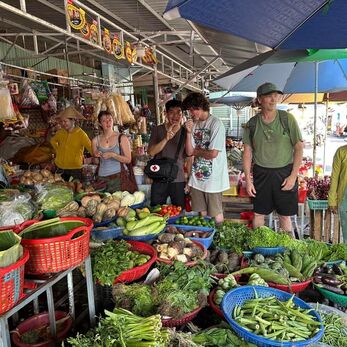
In Trà Vinh, we've developed deep partnerships with local families, artisans, farmers, educators, and community leaders who welcome students into their lives with remarkable generosity. These aren't staged interactions or performances for visitors—they're genuine exchanges between curious young people and patient hosts willing to share their stories.
Students sit in family homes, sharing simple meals and learning about daily rhythms of life in rural Vietnam. They hear stories of resilience from elders who lived through conflict, economic hardship, and dramatic social change. They connect with young people their own age who may have radically different educational opportunities yet share universal dreams of meaningful work, strong relationships, and making a positive difference.
These personal connections accomplish what no documentary or lecture ever could—they make distant others recognizably human. The farmer becomes not "a Vietnamese farmer" but Mr. Thanh, who tells terrible jokes, worries about his daughter's education, and takes immense pride in his organic vegetables. The weaver becomes not "traditional craftsperson" but Mrs. Linh, who innovatively adapted ancient techniques to create contemporary designs that support her family.
Empathy, we've learned, isn't taught through instruction—it emerges through relationship. When students see their own concerns, hopes, and struggles reflected in people whose lives appear radically different from their own, something shifts. The world becomes simultaneously more complex and more connected. Global issues acquire human faces. Abstract statistics transform into stories about real people deserving dignity and agency.
We've watched students return from conversations with local youth and remark with genuine surprise, "They want exactly what we want—just with different obstacles." That recognition of shared humanity, coupled with awareness of different structural realities, is the foundation of genuine global citizenship.
Developing Cultural Intelligence for an Interconnected World
Today's students will work, create, and lead in increasingly diverse, interconnected contexts. Cultural intelligence—the ability to function effectively across cultural contexts—is no longer a nice-to-have soft skill but an essential competency for nearly every career path.
Educational travel to Trà Vinh provides intensive practice in cultural navigation. Students learn to notice and interpret cultural differences—in communication styles, concepts of time, expressions of respect, and approaches to conflict. They practice code-switching, adapting their behavior to show appropriate respect while maintaining authenticity.
The Mekong Delta's multicultural environment offers particularly rich opportunities for developing cultural intelligence. Within a single day, students might participate in a Khmer Buddhist ceremony, visit a Chinese-Vietnamese temple, and attend a community meeting conducted primarily in Vietnamese. They learn that "Vietnamese culture" isn't monolithic but contains beautiful diversity and complexity.
More importantly, students learn the humility essential to intercultural competence. They experience being the linguistic outsider who must rely on gesture and goodwill. They navigate situations where their normal social scripts don't apply. They make cultural missteps and learn from them in low-stakes, supportive environments.
These experiences build what researchers call "cultural humility"—an ongoing process of self-reflection and learning rather than assuming one has mastered another culture. Students leave understanding that they don't need to become experts on every culture they encounter, but they do need to remain curious, respectful, and willing to learn.
Real Learning Outcomes: What Students Gain
The benefits of educational travel to destinations like Trà Vinh extend far beyond the trip itself. Based on our years of program delivery and follow-up with alumni, we consistently observe specific, measurable learning outcomes:
Enhanced Academic Engagement: Students return with deeper interest in subjects from environmental science to economics, history to sociology. Abstract concepts studied in classrooms suddenly have concrete referents. The sustainable farming practices they witnessed illuminate discussions of climate adaptation. The economic development challenges they learned about give context to theories about globalization.
Improved Critical Thinking: Students demonstrate increased ability to analyze complex situations from multiple perspectives, question assumptions, and recognize nuance. They move beyond simplistic either-or thinking toward sophisticated both-and analysis that acknowledges complexity.
Greater Global Awareness: Students develop more accurate, nuanced understandings of global issues and international affairs. They recognize the colonial legacy embedded in language like "developed" and "developing" nations. They understand how global economic systems create both opportunities and constraints for communities like those in Trà Vinh.
Increased Cultural Sensitivity: Students show measurably reduced ethnocentrism and increased appreciation for cultural diversity. They're less likely to make sweeping generalizations about cultures and more likely to ask thoughtful questions when encountering difference.
Heightened Empathy: Students demonstrate increased perspective-taking ability and concern for others' wellbeing, even across significant cultural and geographic distance. Global issues feel more personal and urgent.
Strengthened Communication Skills: Navigating cross-cultural contexts improves students' overall communication competence. They become more attentive listeners, more thoughtful speakers, and more culturally aware communicators in all contexts.
Boosted Confidence and Independence: Successfully navigating unfamiliar environments builds self-efficacy. Students return with greater confidence in their ability to adapt to new situations and solve problems creatively.
The Scivi Approach: Intentional Design for Maximum Impact
Not all educational travel produces these outcomes. The difference lies in intentional program design that goes far beyond logistics and itinerary.
Our approach begins months before departure with pre-trip preparation that builds foundational knowledge, establishes learning objectives, and cultivates appropriate mindsets. Students research Trà Vinh's history, ecology, and cultures. They examine their own assumptions and biases. They learn basic Vietnamese phrases and cultural protocols. They develop research questions to guide their observations.
During the experience itself, we balance structured learning activities with unstructured time for genuine relationship-building and personal reflection. Each day includes multiple opportunities for students to process what they're experiencing—through group discussions, journaling, creative expression, and dialogue with facilitators.
Our local partners aren't just service providers but educational collaborators who help us design authentic learning experiences that benefit both students and host communities. We compensate community members fairly for their time and expertise, ensuring these exchanges are reciprocal rather than extractive.
We also build in structured reflection throughout the experience and after return home. Research consistently shows that experience alone doesn't produce learning—reflection on experience does. Our facilitators guide students through processes of describing what they observed, interpreting what it means, and connecting it to broader concepts and their own lives.
Critically, we help students translate their insights into action. How will this experience inform the choices they make as consumers, citizens, and community members? How might it shape their academic and career paths? What commitments will they make to continue learning and growing?
Beyond Individual Transformation: Ripple Effects
While our primary focus is student learning, we've observed that the impact of educational travel extends far beyond individual participants. Students return as ambassadors, sharing stories and challenging stereotypes among their peers, families, and wider communities. They become advocates for international understanding and cultural exchange.
Schools that implement high-quality educational travel programs often see broader cultural shifts—increased interest in global issues, greater appreciation for diversity, and enhanced overall academic engagement. Teachers report that returned students ask better questions, make more sophisticated connections, and demonstrate increased motivation to learn.
For host communities like those in Trà Vinh, these programs can provide meaningful economic opportunities, create platforms for cultural exchange on their terms, and build international connections that may yield unexpected benefits. When done ethically and collaboratively, educational travel can be genuinely reciprocal, with both students and host communities gaining value from the exchange.
Looking Forward: Education for an Uncertain World
As we face unprecedented global challenges—climate change, mass migration, political polarization, rapid technological change—the skills cultivated through educational travel become increasingly essential. We need young people who can think critically about complex problems, empathize across difference, navigate cultural diversity, and imagine creative solutions that draw on multiple knowledge systems.
Educational travel to places like Trà Vinh isn't escapism or luxury—it's essential preparation for engaged citizenship in the 21st century. It's an investment in developing the intercultural competence, systems thinking, and global awareness that will enable the next generation to collaborate effectively across borders, build bridges across divides, and create more just and sustainable futures.
The world our students will inherit is interconnected, diverse, and complex. Their education must prepare them not just with facts and skills, but with the dispositions and capacities to thrive in and contribute to that world. Educational travel, done with intention and integrity, makes an irreplaceable contribution to that preparation.
Ready to Transform Your Students' Learning?
If you're an educator or administrator curious about how field experiences in Asia can deepen your students' engagement and prepare them for meaningful participation in our interconnected world, we'd love to explore possibilities with you.
At Scivi Travel, we specialize in designing custom educational programs that align with your learning objectives, meet your logistical requirements, and create the conditions for genuine transformation. Whether you're interested in exploring Trà Vinh's remarkable cultural and ecological diversity, Vietnam's broader offerings, or other destinations across Asia, we'll work collaboratively with you to create an experience that serves your students' learning and growth.
Let's connect to discuss how we can bring your students beyond observation and into the kinds of encounters that reshape how they see themselves and the world. Because education is more than information transfer—it's about cultivating the thinkers, empathizers, and culturally intelligent leaders our future depends on.
Contact us today to begin designing your transformative educational travel experience.