Catholicism in Vietnam is often approached in different ways.
For some, it is a path of pilgrimage — a chance to visit sacred sites, participate in prayer, and connect with a long-standing faith tradition. For others, it offers a lens into history, identity, and how belief systems take shape within a particular society.
In practice, these perspectives are not separate. They overlap.
A dispersed landscape of faith
Unlike pilgrimage destinations concentrated in a single region, Catholic heritage in Vietnam is spread across the country.
From the Our Lady of La Vang Shrine in central Vietnam to Phát Diệm Cathedral in the north, and parish communities in the Mekong Delta, these sites form a network shaped by both geography and history.
For participants, this creates a different experience. The journey is not defined by a single destination, but by how faith is expressed in different local contexts.
Architecture as adaptation, not imitation
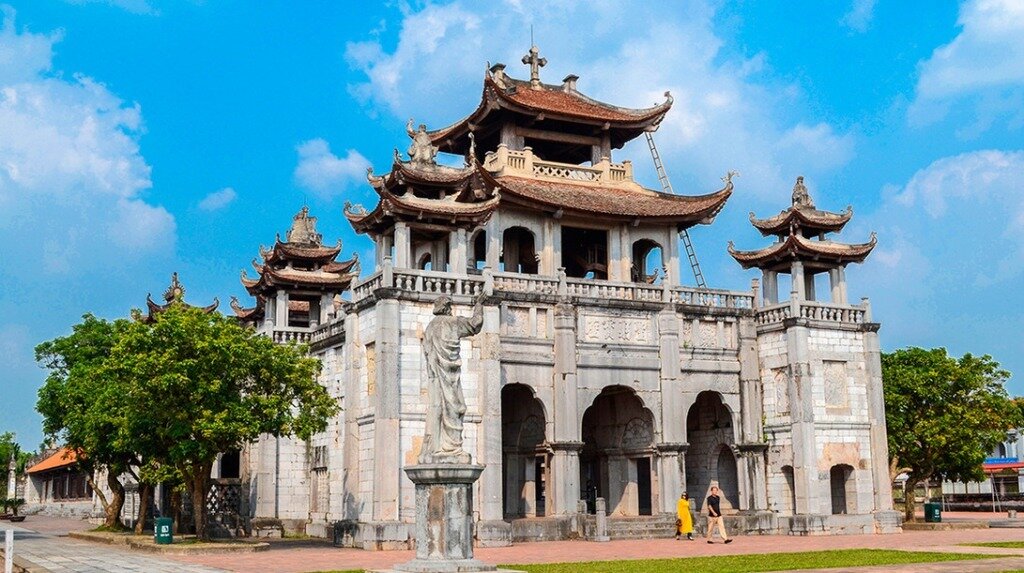
At Phát Diệm Cathedral, the form of the church itself reflects this process.
Built in the late 19th century, it combines elements of European Catholic architecture with traditional Vietnamese design. Stone structures sit alongside curved roofs and spatial layouts more commonly associated with temples.
For some visitors, this is an architectural curiosity. For others, it reflects something deeper — how a global religion is adapted and localized rather than simply imported.
Faith within historical experience
Catholic communities in Vietnam have developed within a complex historical setting, shaped by colonial influence, conflict, and social change.
This history is visible not only in museums or archives, but in how communities gather, how traditions are maintained, and how memory is carried across generations.
For participants, engaging with these sites often raises broader questions: how belief persists, how it adapts, and how it is shaped by the conditions around it.
Lived religion in community settings
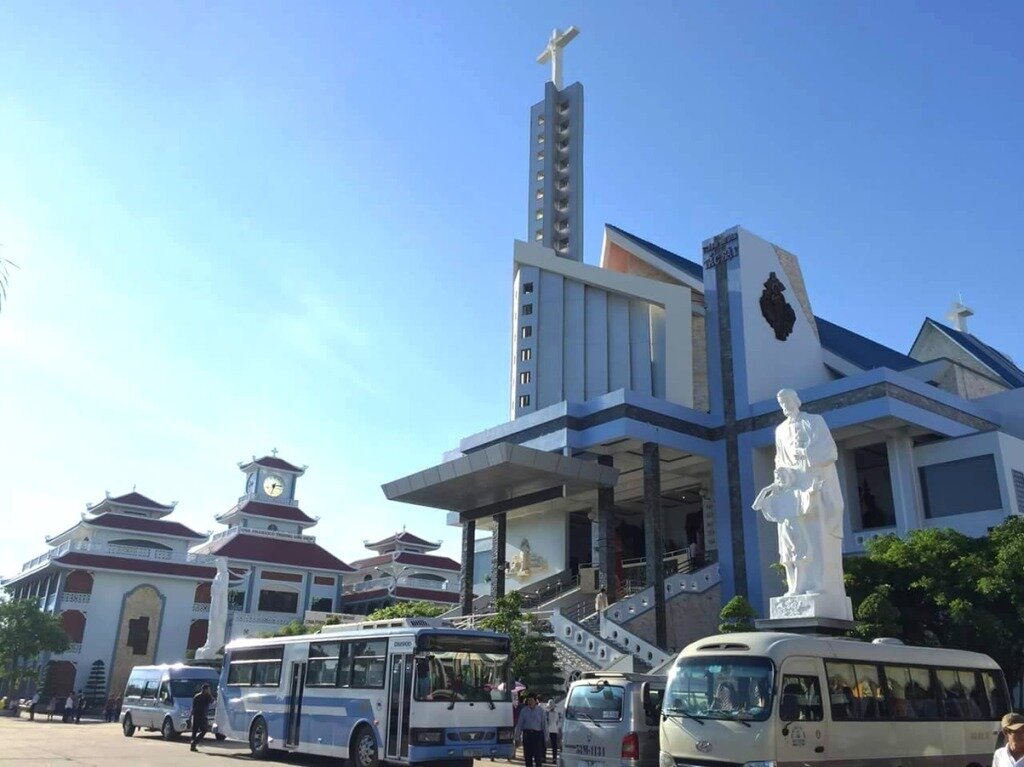
In places such as Tắc Sậy Church in the Mekong Delta, Catholicism is closely tied to local life.
The legacy of figures like Father Trương Bửu Diệp is not only remembered through narrative, but through ongoing practices of service and community connection.
For some visitors, this becomes a space for reflection and prayer. For others, it is a way to observe how faith operates within a social context — how it is practiced, shared, and sustained.
How this fits into a school or study program
In most programs, Catholic heritage is not treated as a standalone segment, but integrated across regions.
It often sits alongside historical, cultural, and community-based elements, offering a different perspective rather than a separate track.
This allows participants to approach the experience in different ways. Some engage more directly with its spiritual dimension. Others focus on its historical and cultural context.
What participants take away
Not every participant experiences these sites in the same way.
For some, the journey reinforces personal faith and provides space for reflection. For others, it opens up questions about how religion interacts with culture, identity, and history.
Across these perspectives, a common pattern emerges.
Catholicism in Vietnam is not encountered as a fixed structure, but as something shaped by place, community, and time.
A shared space between faith and context
This is what makes Catholic heritage in Vietnam distinctive.
It allows space for both devotion and inquiry — for those who come seeking spiritual connection, and for those seeking to understand how belief systems take form within a society.
Rather than separating these approaches, the experience holds them together.
And in doing so, it offers a way of seeing faith not only as something to believe, but as something that can also be observed, interpreted, and understood within the world around it.