Cultural exchange in Vietnam for school trips — what students actually do
Cultural exchange in Vietnam usually looks simple on paper: two schools meet, interact, and learn from each other.
In practice, what happens is more specific — and more dependent on how the session is structured.
What a typical session looks like
Most school exchanges run for a half day, usually around 2 to 4 hours.
Students do not sit and “talk” for long. The session is built around:
-
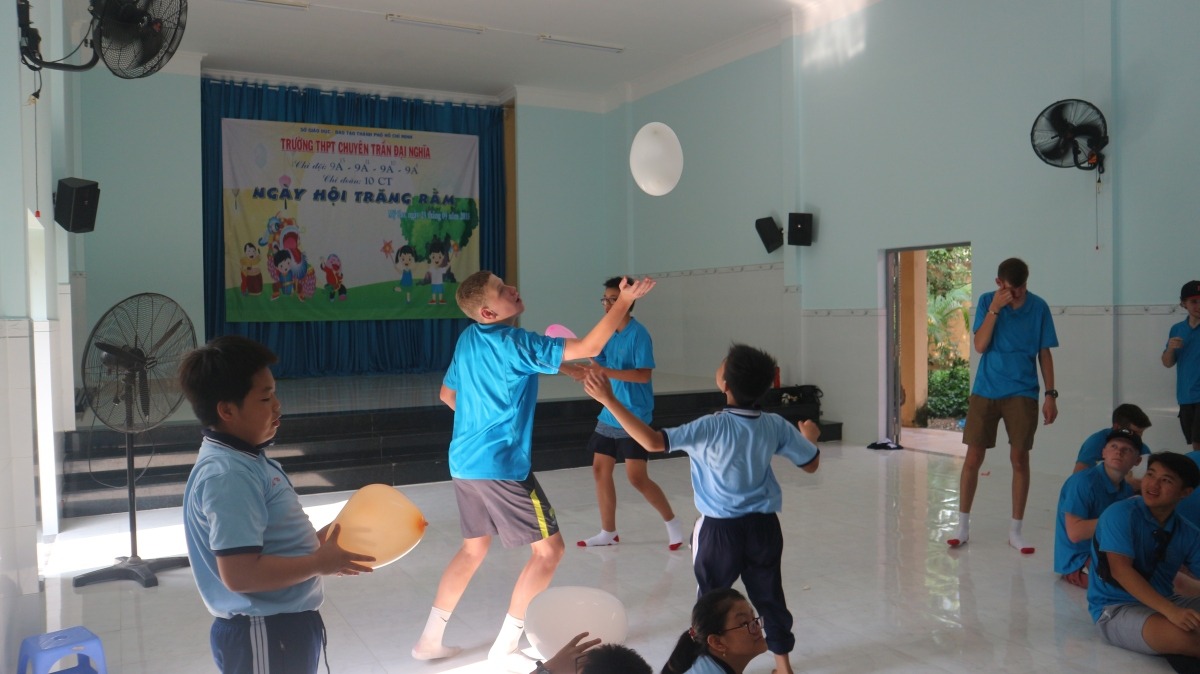
group games and physical activities
-
short shared classroom moments
-
cultural performances from the host school
-
occasional joint participation (singing, dancing, or interactive segments)
Movement matters. Activities that require participation tend to work better than anything discussion-based, especially when language is limited.
The role of language (and its limits)
Language is the main constraint.
In many local schools — especially outside major cities — English proficiency varies widely. Conversations can stall quickly if the format relies too much on speaking.
This is why activity-based formats tend to work better. They allow students to engage without needing full verbal communication.
What tends to feel real
The most consistent moments of genuine engagement are not structured discussions.
They usually happen during:
-
games that require teamwork
-
performances where both groups participate
-
informal interaction around those activities
These are the points where barriers drop quickly, and students respond more naturally.
What actually determines quality
Not all school exchanges feel the same.
The biggest factor is not the activity itself, but the choice of partner school and how the session is facilitated.
-
a well-matched school → higher engagement
-
a poorly matched one → polite but surface-level interaction
This is not always visible from the outside, but it makes a significant difference in how the session plays out.
What to expect (and what not to)
Students usually come in with a general idea of what will happen.
The experience is rarely surprising in structure, but the level of engagement can vary.
Some groups connect quickly. Others stay more reserved. This depends less on the format, and more on the group dynamic and willingness to participate.
What tends to work best
In practice, the most effective sessions:
-
keep things active rather than discussion-heavy
-
create shared moments (not parallel activities)
-
allow some unstructured interaction at the edges
Long, formal programs tend to lose energy quickly.
Shorter, focused sessions with clear participation usually work better.
Who this works for (and who it doesn’t)
Cultural exchange is not the same for every group.
It tends to work well for:
-
groups open to informal interaction
-
students comfortable with ambiguity
-
programs that do not require tightly defined outcomes
It works less well for:
-
groups expecting clear academic outputs
-
programs that need measurable results from each activity
What students take away
Students rarely leave with specific “learning points.”
What they take away is more subtle:
-
how it feels to interact across language barriers
-
how different or similar their peers are
-
how comfortable they are in unfamiliar social settings
These outcomes are not guaranteed. They depend on how engaged the students are during the session.
Cultural exchange in Vietnam is not difficult to run.
But making it meaningful depends less on the format, and more on how the interaction is set up — and how students choose to engage with it.
More latest news
Culture exchange on school trips: what actually makes it meaningful
Culture exchange is a central goal of many school trips, but meaningful understanding does not automatically follow. This article looks at why most exchange remains surface-level, and what changes when students are able to interpret what they experience.
Read more…