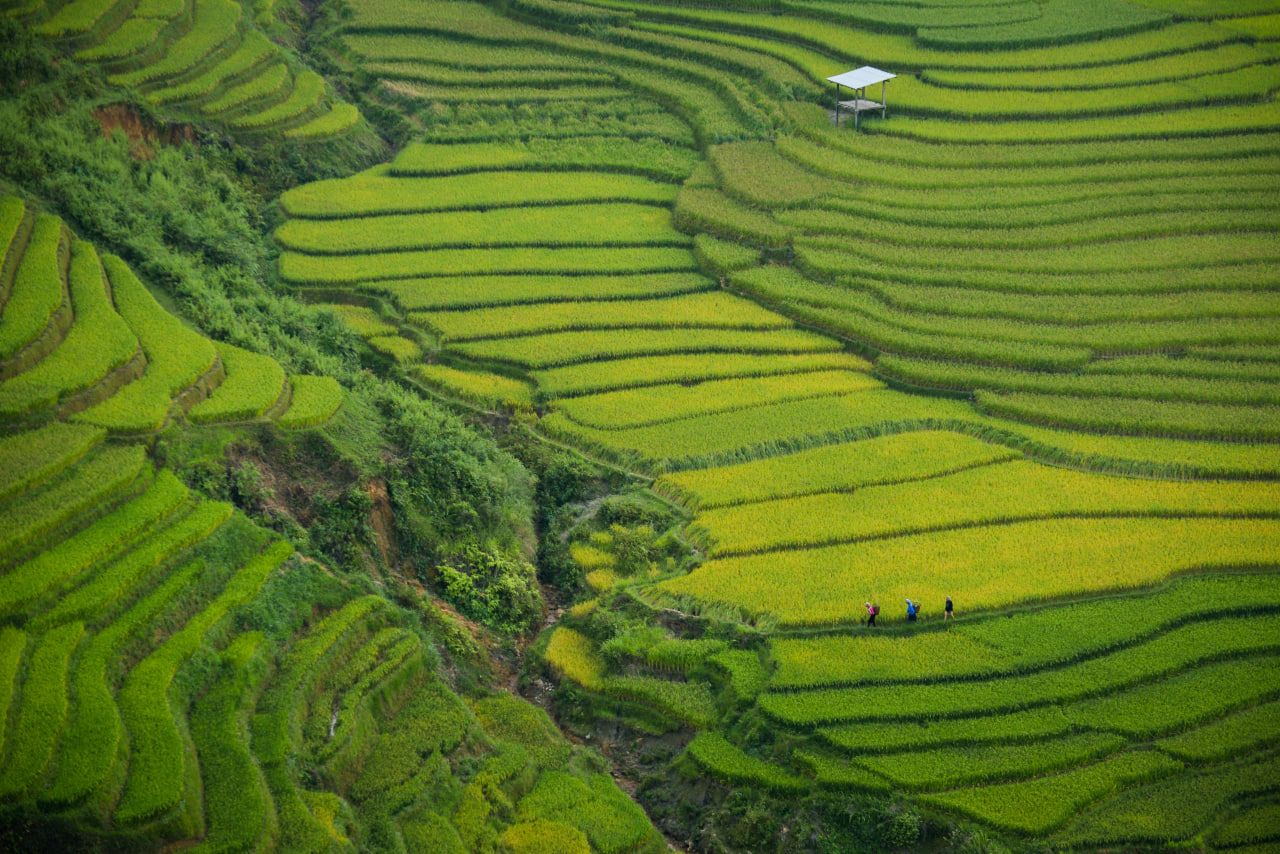
Some moments on a trip stay with students longer than others. Not because they are bigger or more exciting, but because of how they are experienced in the moment.
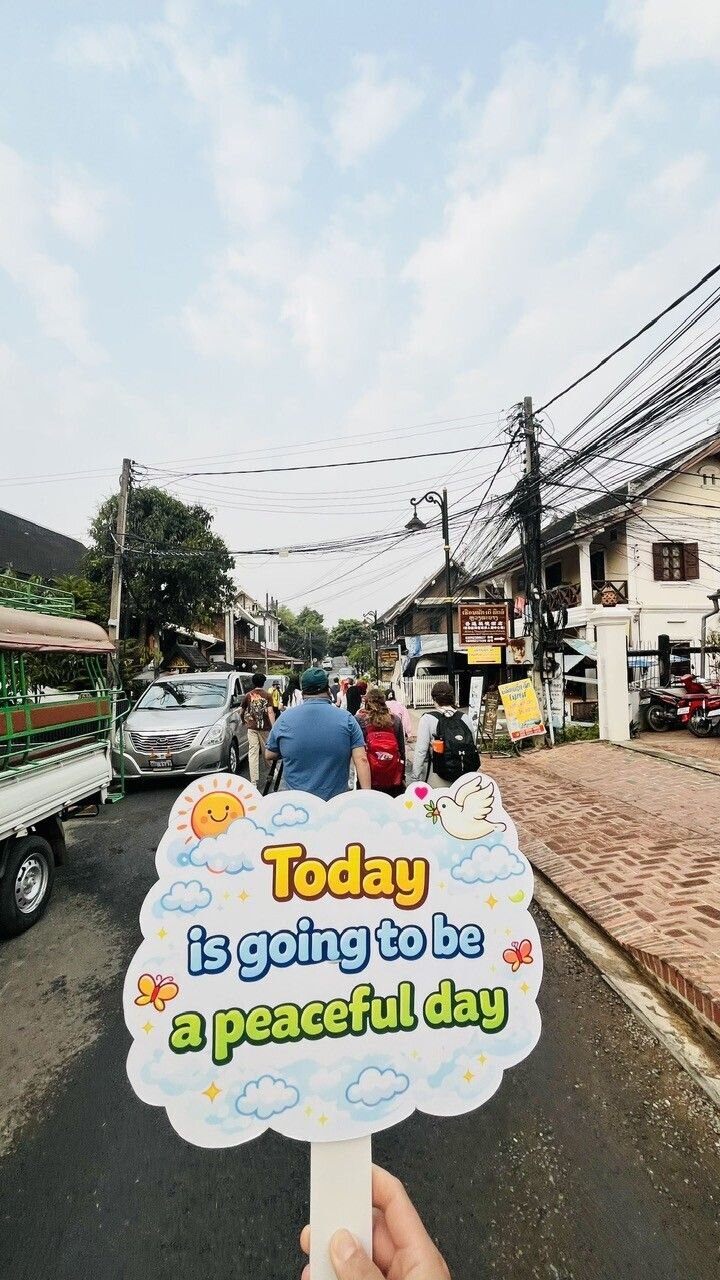
The Walk for Peace movement earlier this year offered a useful reference point. Its focus was simple: slow down, pay attention, and observe without reacting too quickly. We adapted that idea into a small, practical anchor for the program: “Today’s gonna be a peaceful day.” Not as a slogan, but as a way to guide how students approached each day.
In practice, this didn’t change the structure of the itinerary much. The same places, the same sequence. What changed was how students entered those moments.
There was no need to over-direct. Just a light framing at the start of the day, and then letting the environment take over.
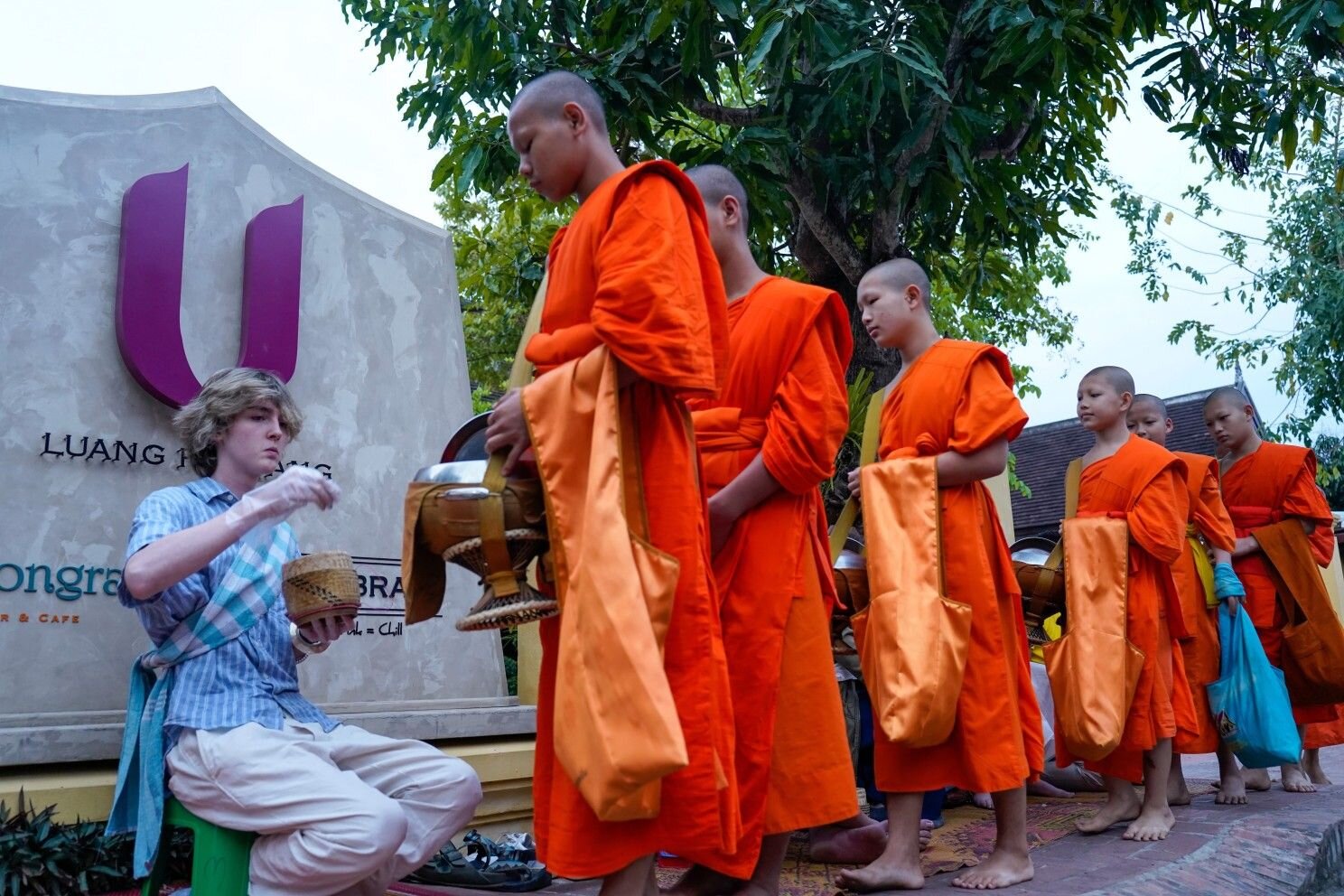
One morning, students took part in an alms-giving ritual. They joined from the beginning, moving through it alongside local residents. The pace of the ritual, the quiet, and the repetition shaped the experience on their own. Without much instruction, students began to adjust—lowering their voices, paying attention to timing, becoming more aware of how to be present without interrupting what was already there.
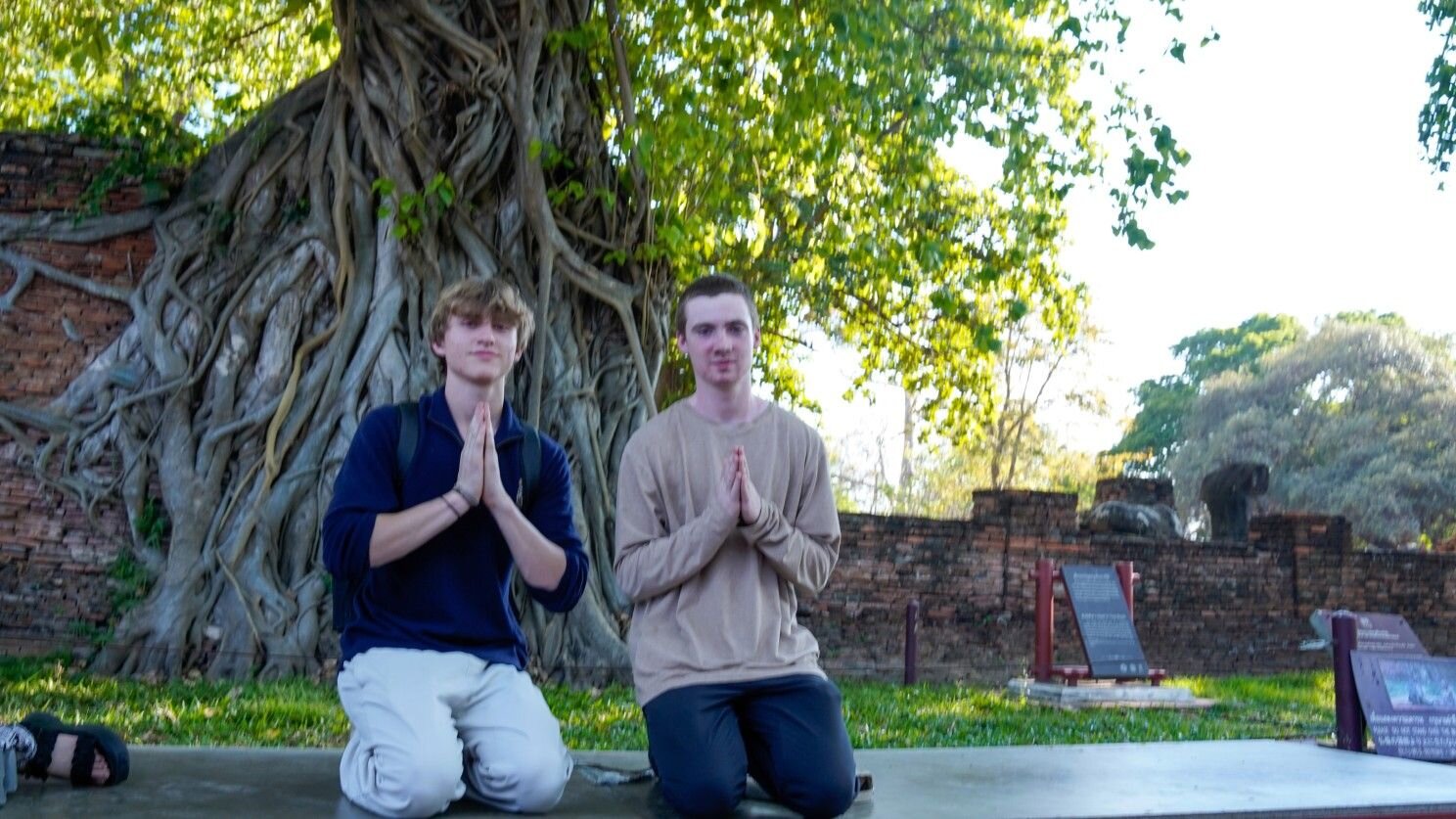
A similar dynamic played out in temple visits. Guidance was minimal—just enough to avoid obvious missteps. After that, the space itself did most of the work. Students picked up cues from others around them: where to stand, how to move, when to bow. It wasn’t explained in detail, but it didn’t need to be.
None of this is particularly structured. But it shifts how students pay attention. Instead of being told what something means, they start by noticing how it feels, how it unfolds, and how they fit into it.
Over time, that shows up in small ways. They take a bit longer before reacting. They notice more. They become more comfortable sitting with something that isn’t immediately clear.
From a design point of view, the change is subtle. It’s less about adding layers, and more about holding back—trusting that the setting, if entered with the right level of attention, can do a lot of the work on its own.
It’s a small shift, but it tends to stay with them longer than expected.
More latest news

Festivals in Vietnam as a learning context for school trips
Festivals are not just cultural experiences in school trips to Vietnam. They are contexts where students engage with real-world systems, uncertainty, and collective behavior in ways that structured programs cannot replicate.
Read more…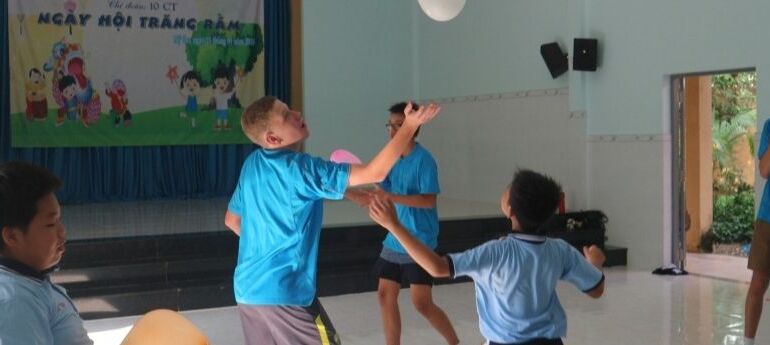
Culture exchange on school trips: what actually makes it meaningful
Culture exchange is a central goal of many school trips, but meaningful understanding does not automatically follow. This article looks at why most exchange remains surface-level, and what changes when students are able to interpret what they experience.
Read more…