Educational Tourism in Tra Vinh: From Nature-Based Agriculture to Community-Based Ecological Experiences
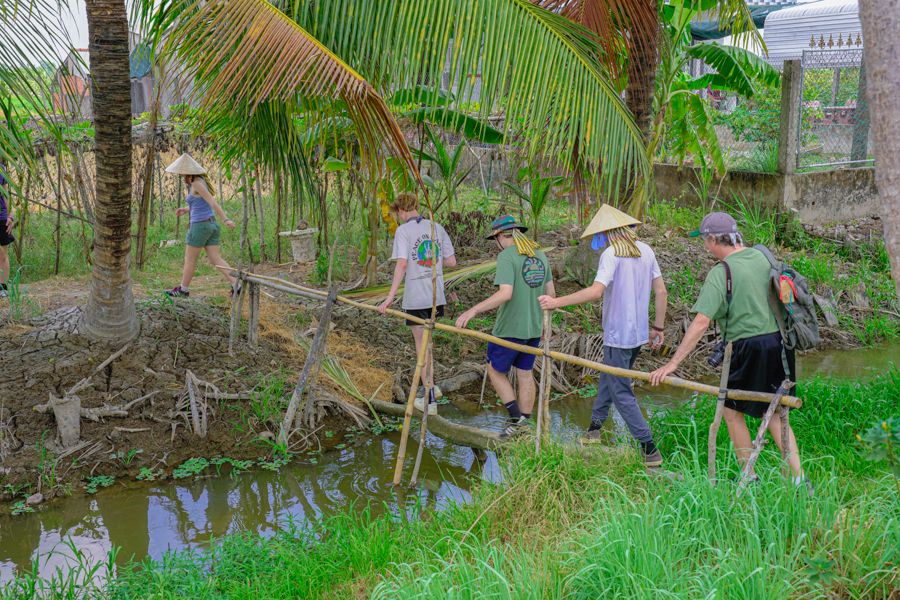
Learning does not only take place within the four walls of a classroom or through the pages of a textbook; it is forged through immersive experiences - where learners directly observe, engage, and reflect. Within this flow, educational tourism opens up a more flexible approach, allowing knowledge to be gathered from real-life contexts. In Tra Vinh, a quintessential province of the Mekong Delta, nature-based agriculture, riverine ecosystems, and a multicultural community have created an open learning space rich in educational potential for students.
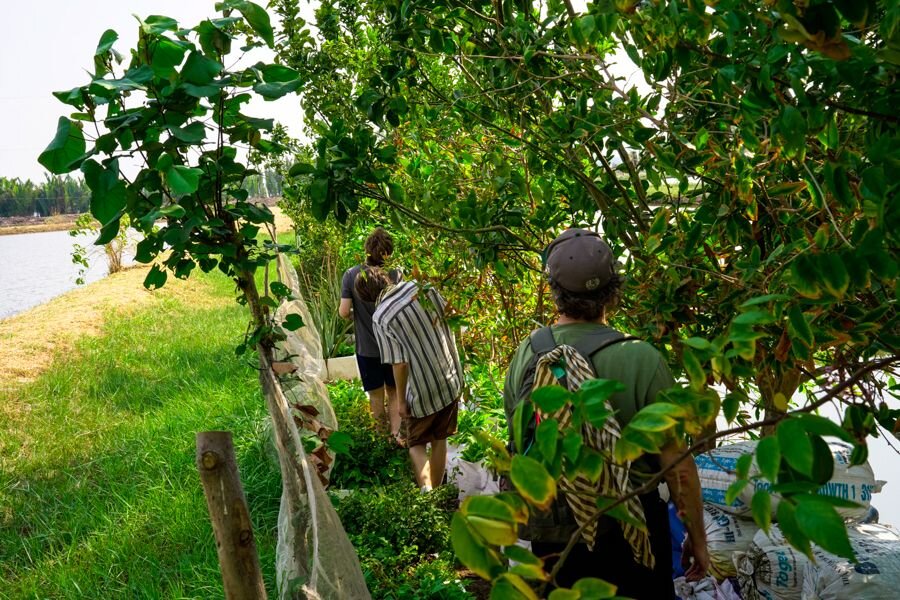
(visiting orchards and observing local organic farming practices)
The Story of Agriculture: Harmonizing with Nature for Sustainable Development
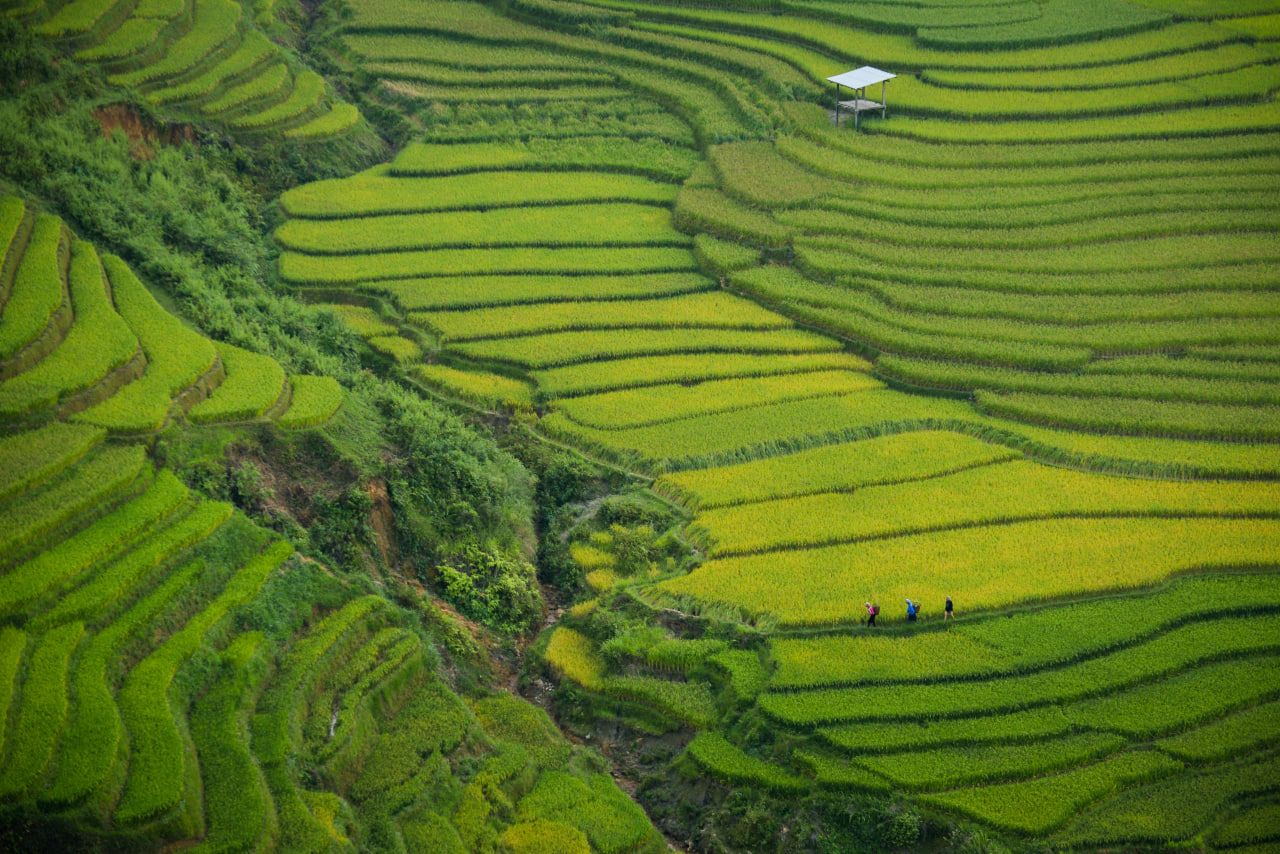
Characterized by a tropical monsoon climate, Tra Vinh does not have four distinct seasons but is instead divided into the rainy and dry seasons. This alternation not only shapes the rhythm of life but also governs the farming methods of the local people. The rainy season provides favorable conditions for rice production and short-term crops, while the dry season is the ideal time for aquaculture and fisheries.
The philosophy of "eating and growing what the season provides" is maintained as a principle of sustainable cultivation: no forced harvesting, no violent interference with nature, even if this sometimes leads to economic disadvantages. Accepting natural limits in exchange for long-term stability reflects a valuable form of indigenous knowledge, where humans learn to adjust their production activities instead of controlling the environment. For students, this is an opportunity to directly observe the relationship between climate, land, and livelihoods, and to deepen their understanding of sustainable development in an agricultural context.
Ecosystems and Community Consciousness in Environmental Protection
Alongside the advantages of fertile alluvial soil, Tra Vinh also faces major challenges from saltwater intrusion and the impacts of climate change. In this context, the coastal mangrove system acts as an "ecological shield," contributing to coastal protection, stabilizing habitats, and maintaining biodiversity.
These mangrove forests are not only a testament to the local soil and climate characteristics but also reflect a shift in community awareness. The fact that local people work together to plant, preserve, and protect the forest shows how environmental knowledge is formed through practice, shared experience, and collective responsibility. From an educational perspective, this is a prime case study for students to approach global environmental issues through specific local actions.
Cultural Diversity and Learning Experiences from the Community
Tra Vinh is a cultural crossroads for three main ethnic communities: the Khmer, the Kinh, and the Hoa (Chinese-Vietnamese). This diversity is evident in daily life - from cuisine and architecture to beliefs and language. Rather than existing as separate fragments, these cultural elements intertwine and complement each other, creating a highly connected social structure.
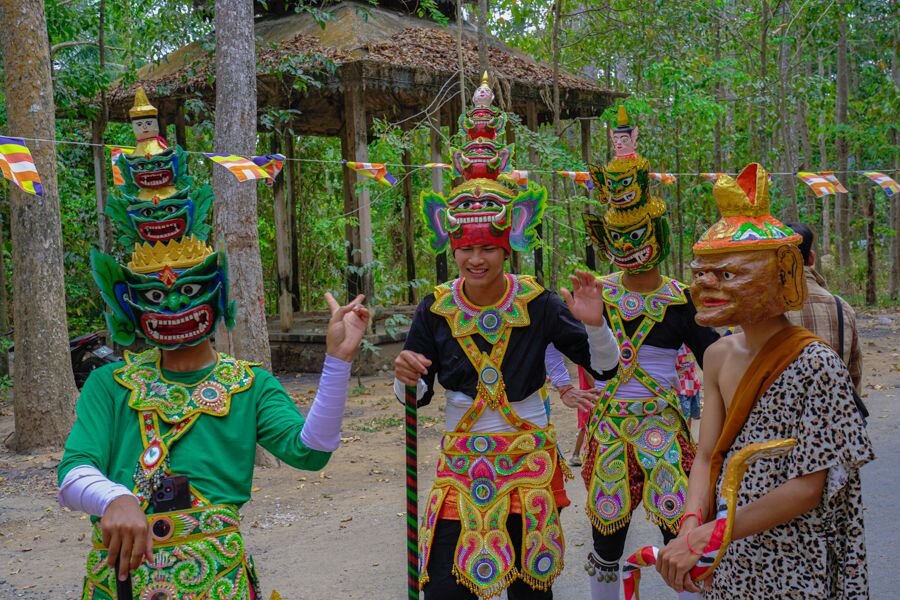
(Khmer cultural festivals)
For students, approaching Tra Vinh is not just about surface-level observation; it is a process of delving into cultural layers through direct interaction with local people. Relationships are built on sharing and trust, allowing learners to participate in the daily life of the community rather than just standing as outsiders. These experiences are not staged; they occur as sincere exchanges between the learner and the local, where knowledge is transmitted through stories, habits, and living memories.
As a result, students gradually realize that empathy cannot be formed through theoretical lectures but arises from real relationships. When personal concerns, hopes, and difficulties are reflected in the lives of people who may seem very different, the learner's worldview begins to shift. Abstract social and cultural concepts become more concrete, tied to real people and real contexts.
What Do Students Carry Back After the Journey?
Words printed on paper may fade with time, but real-life experiences and discoveries remain vivid and enduring. Students will never forget the image of Vietnamese farmers carefully harvesting seasonal crops - fresh, wholesome, and deeply connected to the rhythms of nature. Through these moments, they come to understand that pursuing sustainability and environmental protection begins with respecting nature itself. Although this approach may sometimes affect local livelihoods in the short term, accepting natural limits in exchange for long-term stability reflects a valuable form of indigenous knowledge - one that not every place is able or willing to preserve.
After witnessing the close bond between local communities and mangrove forests, students also begin to notice another form of connection: the connection between people. As mentioned earlier, Trà Vinh is home to three main ethnic communities - the Khmer, Kinh, and Hoa. They live harmoniously, connected through mutual respect for one another’s cultures. Students may hear not only Vietnamese, but also Khmer and Chinese spoken in everyday life. While they share a common language for communication, each community continues to preserve its own cultural identity. Some students are particularly struck when participating in Khmer festivals, where traditional dances and rituals take place. Although the Khmer community plays the central role, members of the Kinh and Hoa communities are also present, reflecting a spirit of inclusivity. Culture, in Trà Vinh, is a fertile ground for learning - not just one culture, but the dynamic intersection of three, each with its own architecture, language, and cuisine.
After the journey to Trà Vinh, students return not only with new knowledge, but with a subtle shift in perspective. Here, development is not measured by speed or output, but by the ability to live in harmony with nature and with others. Seasonal farming practices, community-led mangrove conservation, and the intertwined cultural life of the Khmer, Kinh, and Hoa demonstrate that knowledge does not reside solely in textbooks - it exists in everyday choices and lived realities. Educational tourism in Trà Vinh does not offer pre-packaged lessons; instead, it creates space for learners to observe, question, and form their own understanding. Through direct engagement, students learn to respect natural limits, appreciate cultural differences, and cultivate social empathy. These lessons may be quiet, but they are lasting - extending beyond the journey itself and continuing to shape how students view the world long after they return.
Are you ready to begin this transformative journey with us in Trà Vinh?
Contact us today to begin designing your transformative educational travel experience.