Farm-to-Table Learning in Vĩnh Long: Understanding Food Systems Where They Actually Begin
Some places are remembered for their landscapes. Others for their people. Vĩnh Long is remembered for its flavors.
It might be the clean, gentle sweetness of Bình Minh’s Năm Roi pomelo, the rich, unmistakable aroma of Ri6 durian from Long Hồ, or the balance of sweet and slightly tangy notes in Tam Bình’s green-skinned oranges. Or it could simply be a table filled with dishes like grilled snakehead fish, field crab hotpot, or a freshly made clam bánh xèo from Cù Lao Dài - food that doesn’t try to impress, but feels deeply rooted in everyday life.
At first glance, Vĩnh Long looks like a fertile agricultural region. But if you stay a little longer, you begin to notice something else: behind that abundance is a quiet, well-functioning food system - one that starts from the land, moves through people’s hands, and ends at the table without ever feeling disconnected.
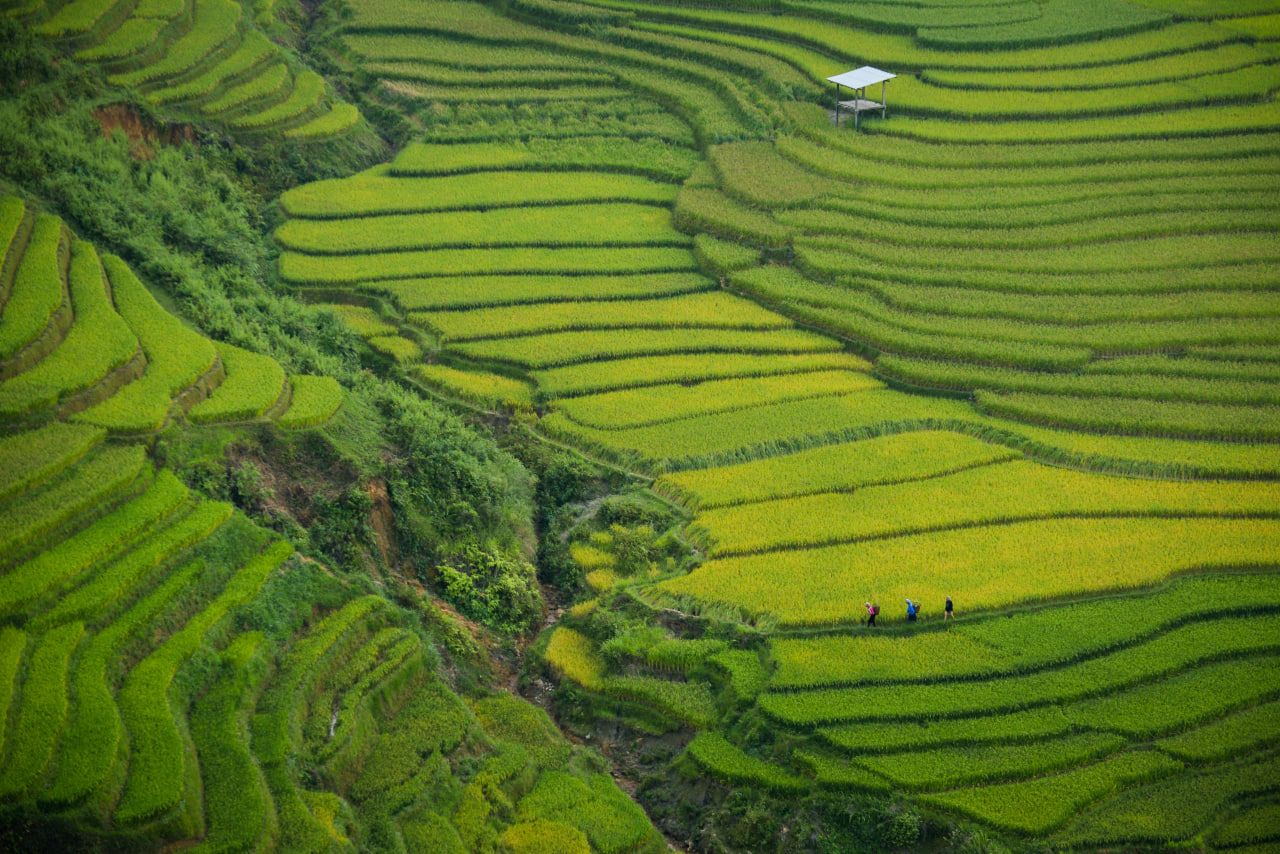
Located in the Mekong Delta, where rivers shape both agriculture and daily life, Vĩnh Long offers a rare opportunity to see how food systems actually work - without needing them to be explained.
Local Specialties as a Way to Read the Land
In Vĩnh Long, local specialties are more than products to be named or promoted. They are rooted in specific places, and that connection feels immediate. Bình Minh is known for Năm Roi pomelo and thanh trà (a local citrus fruit), while Long Hồ is associated with Ri6 durian and rambutan. Tam Bình is known for its green-skinned oranges, Vũng Liêm for cát núm mango (a local mango variety), and Bình Tân for its well-known sweet potatoes. None of these associations is accidental. Each crop thrives where soil, water, and climate come together in the right way. Over time, people have learned to work with those conditions rather than against them.
So when you look at Vĩnh Long’s produce, you are not just looking at food. You are looking at a landscape expressed through fruit - shaped by the environment and by the choices people have made to live with it.
From Orchard to Table, Without Much Distance
One of the most noticeable things in Vĩnh Long is how little distance there is between where food is produced and where it is consumed.
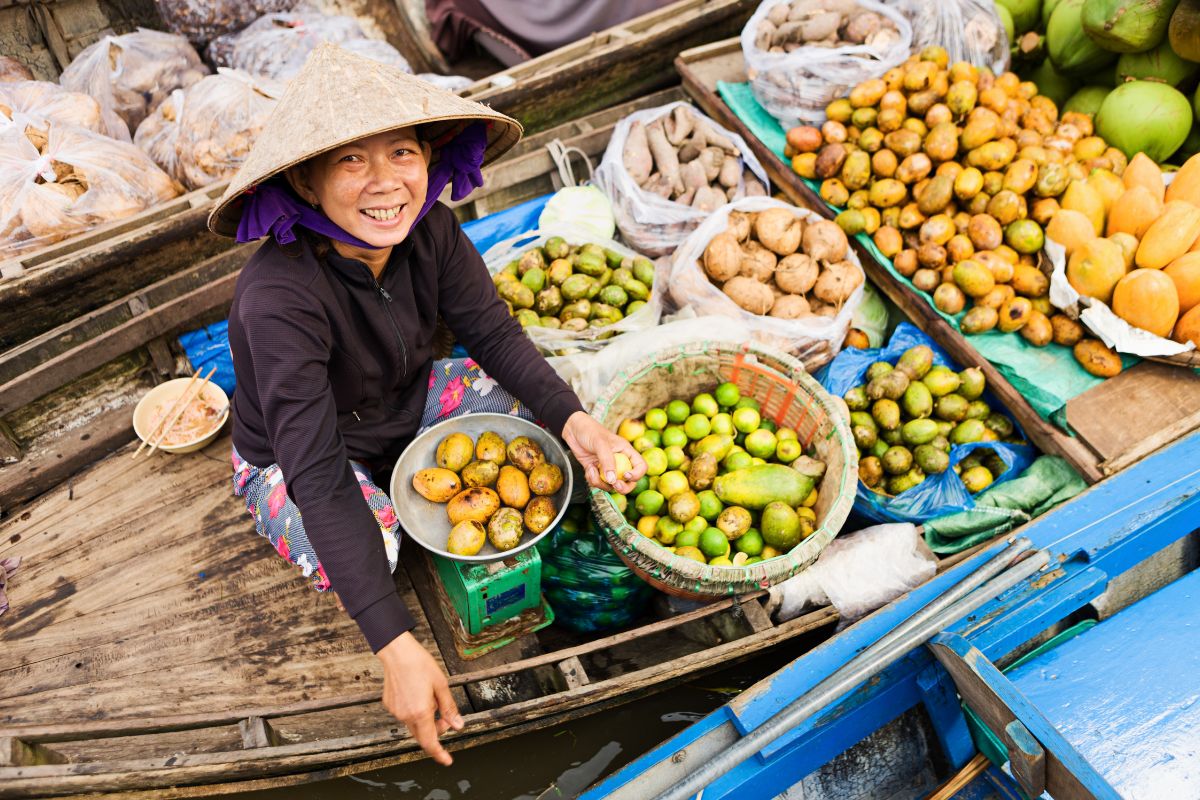
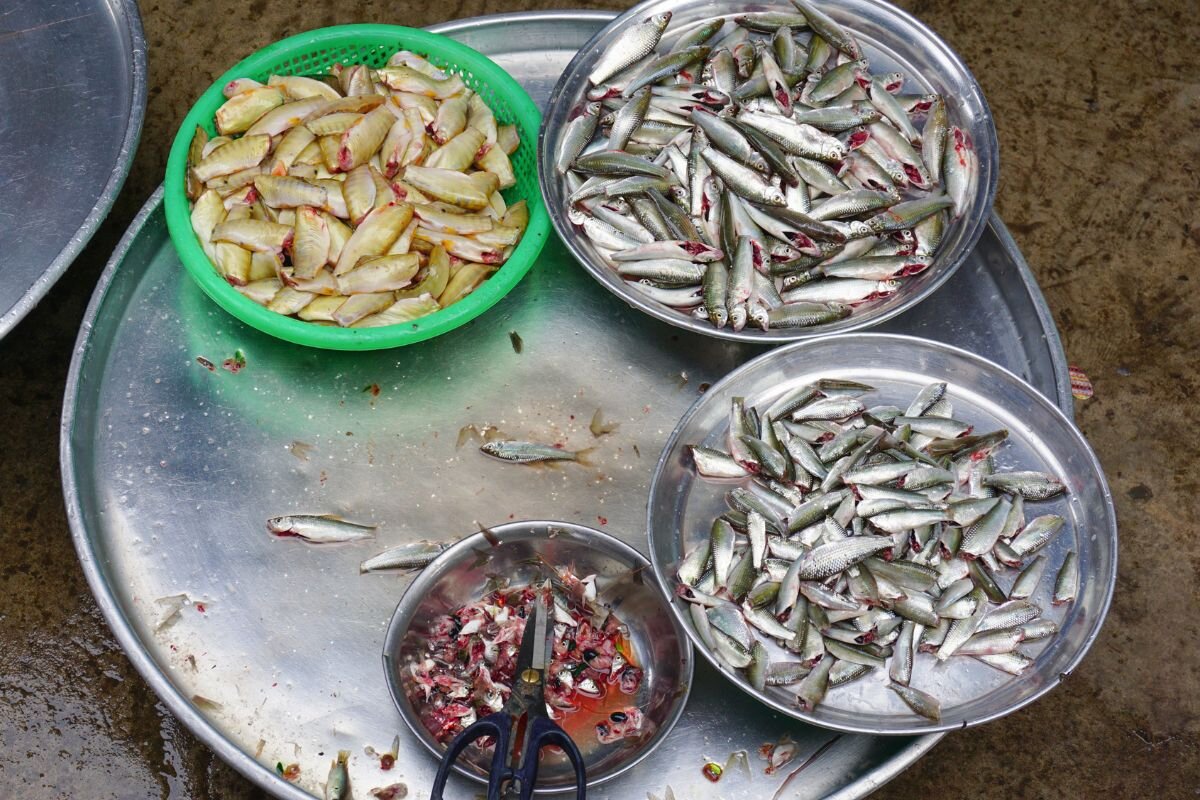
Fruit harvested in the morning can appear in local markets within hours. Fish, crabs, and shellfish from the river system often go straight from water to kitchen. There’s no long chain of intermediaries and very little sense of detachment.
That’s why dishes like grilled eel in reed tubes, braised fish in coconut water, or grilled field rat don’t feel like curated specialties - they feel like natural outcomes of the environment. People cook with what is available, and over time, those habits become cuisine.
In this context, “farm-to-table” is not a designed concept. It is simply how things have been done all along.
Understanding Food Systems Through What People Actually Eat
“Food systems” can sound abstract, but in Vĩnh Long, it becomes much easier to grasp when you start with a simple question: why do people eat what they eat here?
The answer leads back to the environment. The river network and fertile soil support fruit orchards, while the surrounding ecosystem provides fish, crabs, snails, and other ingredients that shape local diets. These conditions determine what is grown, what is caught, and ultimately, what ends up on the table.
From there, a pattern emerges. Food is not just about preference - it reflects geography, seasonality, and availability.
A dish like clam “bánh xèo” (Vietnamese savory crispy pancake) from Cù Lao Dài makes sense given its location, ingredients, and the way people live around it. A good orange from Tam Bình carries not just sweetness, but also the characteristics of the soil that produced it.
Understanding these connections is what makes learning in Vĩnh Long interesting. It’s less about memorizing facts and more about recognizing relationships.
When Local Food Moves Beyond the Local Context
What adds another layer to Vĩnh Long’s food system is the way some of its products move beyond the region.
Pomelo, durian, and sweet potatoes from the province are no longer limited to local markets. They are part of larger supply chains, reaching urban consumers and, in some cases, international markets.
This shift changes the role of food. It is no longer just something that supports daily life—it also becomes a commodity shaped by standards, demand, and scale.
As a result, production decisions begin to adapt. Farmers consider not only what grows well, but also what sells well. The system expands, and with it comes a new set of pressures and opportunities.
Seeing this transition helps frame food systems more clearly: they are not static. They evolve with markets, expectations, and external influences.
In Vĩnh Long, food never really feels like the final step. It always points back to something else - soil, water, seasons or the people who work with them.
From orchard produce to everyday meals, from local markets to broader distribution networks, everything is connected in ways that are easy to observe if you take the time to look.
And that is where the value of farm-to-table learning lies here - not in being told how the system works, but in being able to see it, taste it, and gradually understand it through experience.
More latest news
Embracing Cultural Exchange in Vietnam - A Guide to Meaningful Experiences
Vietnam, with its rich history, diverse traditions, and warm hospitality, offers a fertile ground for cultural exchange. This blog explores how cultural exchange programs in Vietnam foster mutual understanding, enrich perspectives, and create lifelong memories.
Read more…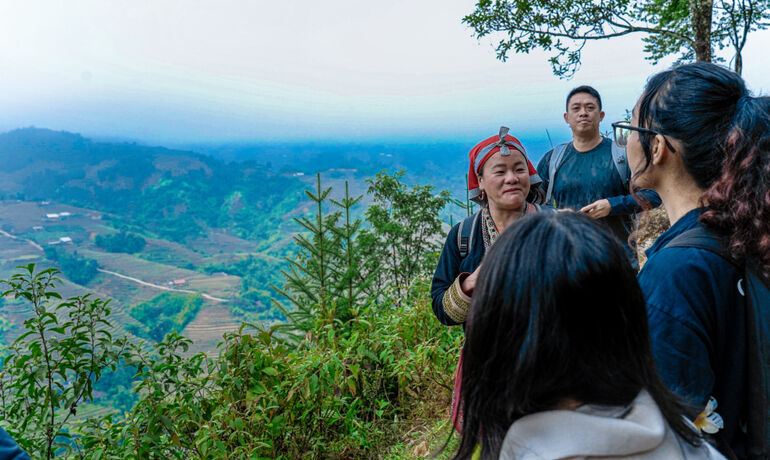
Exploring STEM Travel Programs in Vietnam - Where Education Meets Adventure
Vietnam, a country steeped in history and rich in cultural diversity, is also emerging as an exciting destination for STEM (Science, Technology, Engineering, and Mathematics) travel programs. From innovative projects to ecological explorations, Vietnam offers a myriad of opportunities for students and enthusiasts alike to engage deeply with STEM
Read more…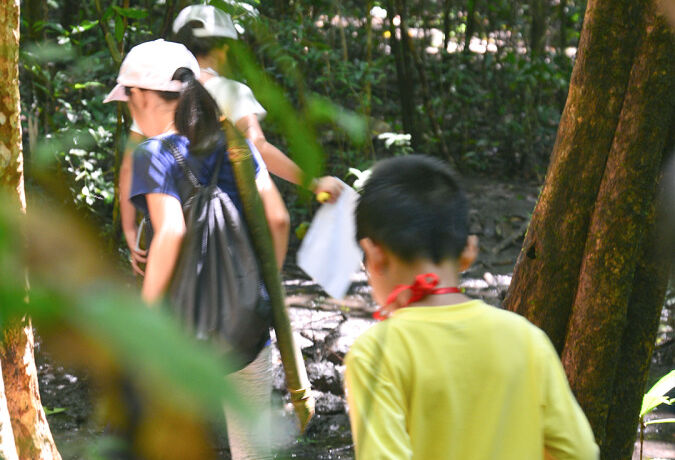
5 Ways to embrace Sustainable Tourism in Vietnam
5 Ways to Embrace Sustainable Tourism in Vietnam Tourism in Vietnam presents an opportunity to make a positive impact on the environment and society while enjoying the country's beauty. By adopting sustainable practices, travelers can contribute to the
Read more…