Mangrove Ecosystems in Ben Tre and Their Role in the Mekong Delta
At the far edge of the Mekong, where land and water never fully part, a layer of forest quietly holds the shoreline. Less loud than primary rainforest, less majestic than high mountains, the mangroves of Bến Tre present themselves with a raw, low-lying humility. Yet it is precisely that humility that upholds an entire delta.
At Vam Ho Forest (Rừng Vàm Hồ) - commonly known as the Vàm Hồ bird sanctuary - the wetland ecosystem appears as a multi-tiered living structure, where every movement has its reason for existing.
Vam Ho Forest (Ba Tri): an ecosystem that breathes
The space at Vàm Hồ is not merely “a forest.” It is a living architecture.
The upper tier is formed by nipa palm, date palm, mangrove species such as Rhizophora and Avicennia - trunks rising from the salty mud, their roots tangled like a net anchoring the soil. The mid tier is reedbeds, taro-like plants, and spiny sedges - a soft cushion for insects, reptiles, and small birds. Between them lie open water patches where sunlight shatters into silver ribbons at sunrise.
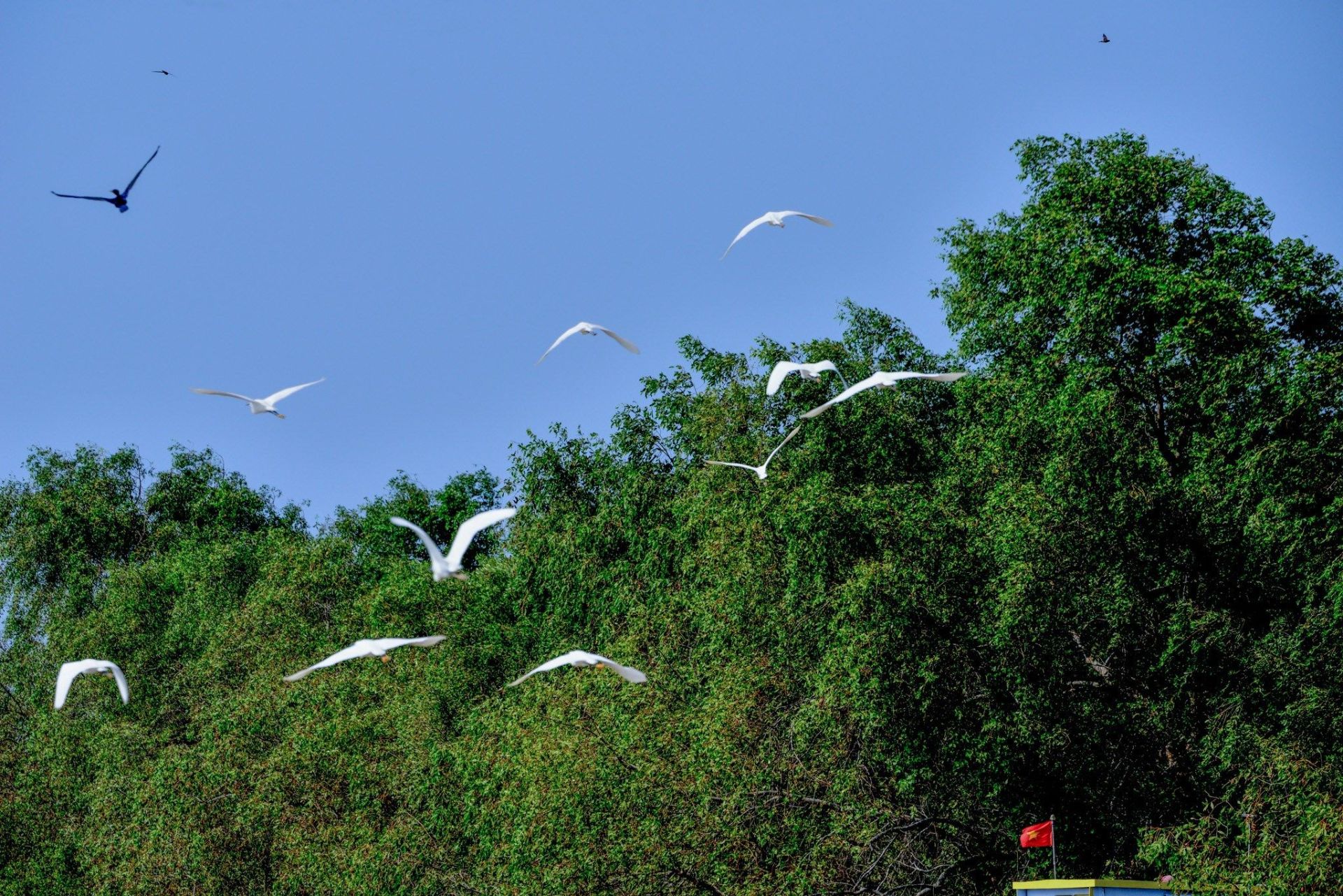
Mornings here do not begin with traffic but with the stir of wings. Hundreds of herons, egrets and storks leave their roosts, creating a movement that is at once chaotic and ordered. The air carries the scent of mud laced with the faint salt of brackish water - a distinct aroma of the estuarine edge.
Local management statistics record 234 plant species and 123 animal species within this area. These figures do more than indicate biodiversity; they reflect the extraordinary adaptability of life to the shifting saline and fresh water regimes shaped by the tides.
The visitor-managed area is roughly 60-70 hectares, while the broader ecological zone extends much further. That balance makes the place accessible to people without compromising the natural rhythms that sustain the ecosystem.
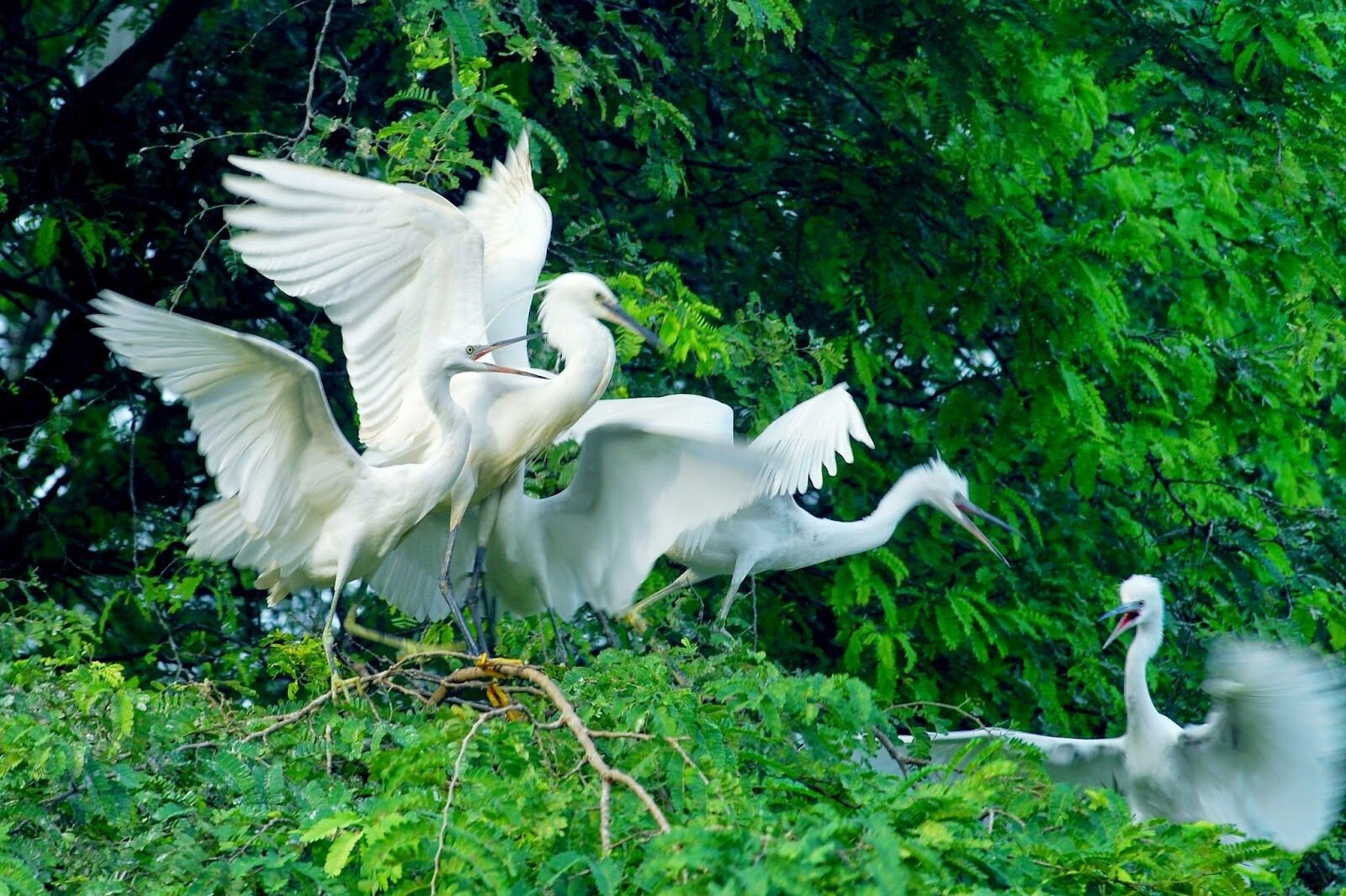
(Vam Ho Bird Sanctuary - image source: BestPrice Travel website)
The role of mangroves: where land, water and people connect
1. Holding the land before holding people
Mangroves do not confront storms head-on; they absorb. Dense root networks dissipate wave energy, trap sediment, and slow coastal erosion. In the Mekong Delta - under pressure from sea level rise and shoreline retreat - this function is not symbolic; it is a matter of survival.
When the forest is healthy, the shoreline holds. When the shoreline holds, fishing villages and inland gardens remain protected. That quiet causal chain shapes the future of many coastal communities.
2. A nursery for local value chains
Beneath the tangle of mangrove roots lie nurseries for juvenile fish, shrimp, and crabs. The forest functions as a “natural hatchery” for fisheries. The abundance of aquatic life not only feeds the ecosystem but also feeds people.
In well-preserved mangrove areas, livelihoods that combine controlled harvesting and under-canopy aquaculture can sustain a balance between economy and ecology.
3. A silent carbon bank
Mangroves belong to the category of “blue carbon” ecosystems - capable of storing large amounts of carbon in both biomass and waterlogged soils. In the context of climate change, conserving mangroves is not merely landscape preservation; it is retaining a portion of nature’s capacity to sequester greenhouse gases.
Nguoi Giu Rung (Người Giữ Rừng): a space to understand the forest from within
Within the mangrove complex, Nguoi Giu Rung (Người Giữ Rừng) is more than a stop on a map. It opens a path to deeper field-based understanding.
The site allows observation to go beyond surface scenery. From trails beneath mangrove canopies and narrow interlacing canals to zones of mixed under-canopy aquaculture, every element becomes learning material. Rather than merely hearing about the forest’s role in “holding the land,” visitors can see how intertwined roots retain sediment after each tide. Instead of reading about a “natural nursery,” one can observe the tiny organisms clinging to prop roots and the way currents deliver-and withdraw-nutrients in cycles.
Here the forest is not presented as a dry ecological concept but as an operating entity. Hands-on activities - paddling a boat through the mangroves, learning to identify mangrove species, watching birds at dawn - create a learning process grounded in direct contact.
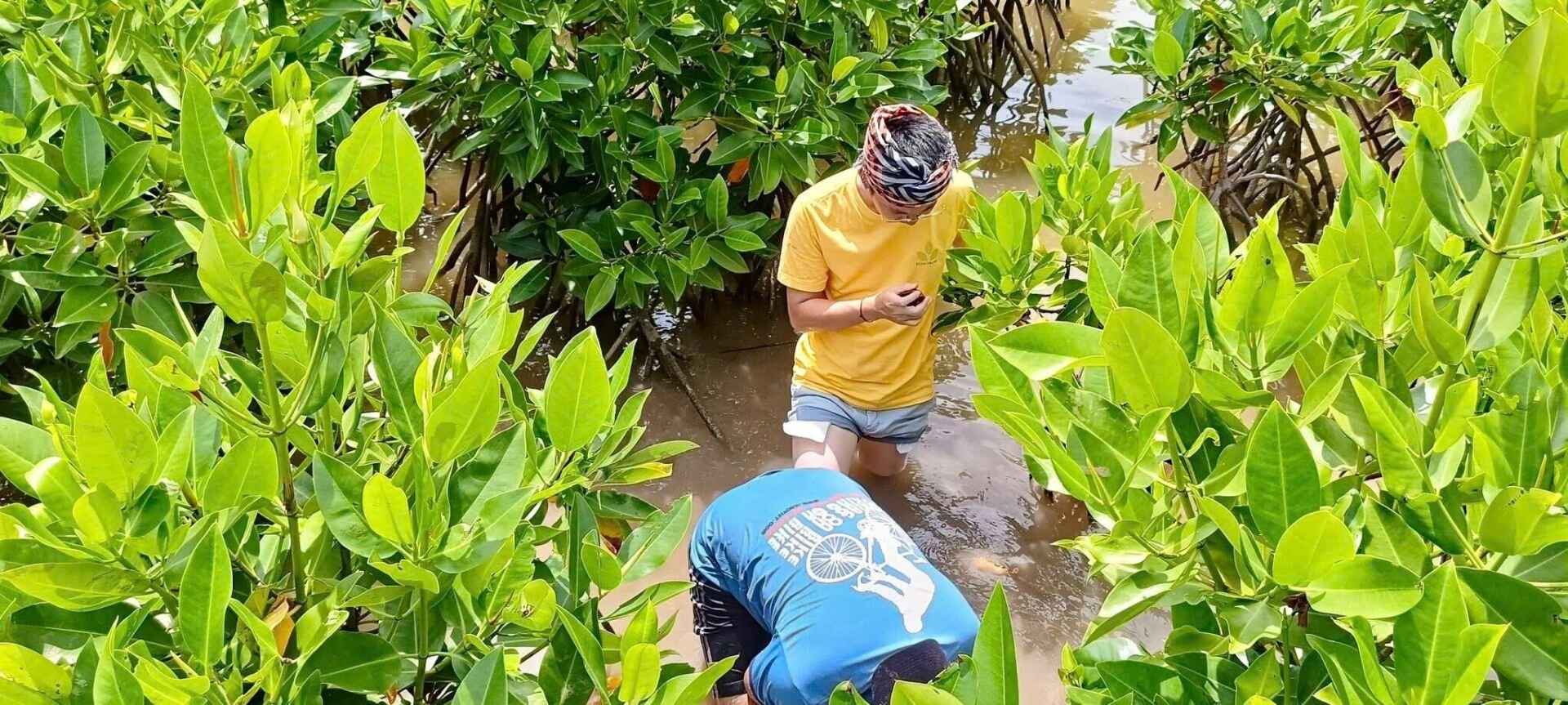
(Activities at Nguoi Giu Rung Ecotourism Area)
This kind of engagement changes how the mangrove is perceived. Placed in a field context, the ecosystem ceases to be a mere “object of study” and becomes a living structure with rhythms, thresholds of tolerance, and capacities for recovery if treated with respect.
Learning about the mangrove, therefore, is not only information gathering. It is the process of understanding the links between biological structure and human livelihoods within the same geographic space.
Are preparations ready for an educational adventure to the mangrove forests of Bến Tre? Contact Scivi Travel to design a customized field trip aligned with curricular goals and to create unforgettable learning experiences for students.
More latest news
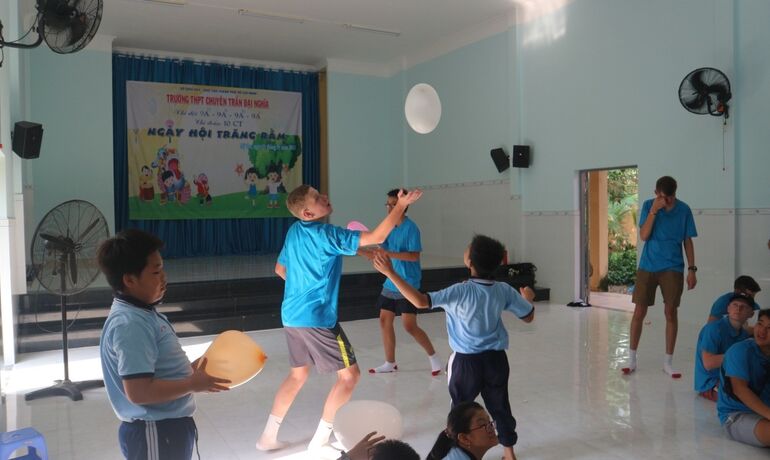
Embracing Cultural Exchange in Vietnam - A Guide to Meaningful Experiences
Vietnam, with its rich history, diverse traditions, and warm hospitality, offers a fertile ground for cultural exchange. This blog explores how cultural exchange programs in Vietnam foster mutual understanding, enrich perspectives, and create lifelong memories.
Read more…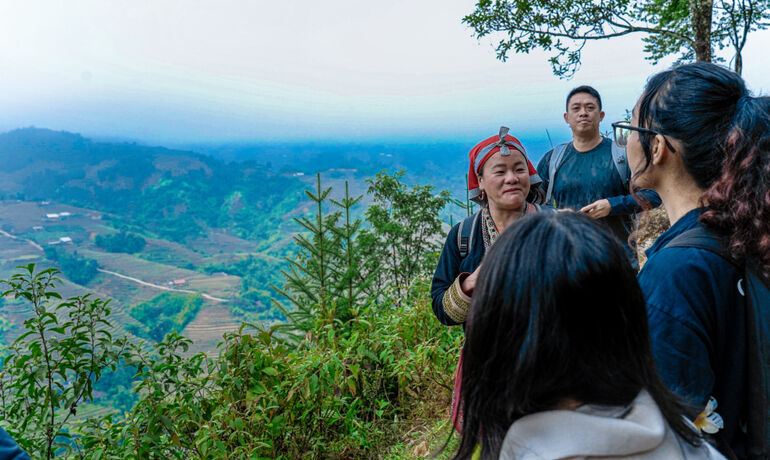
Exploring STEM Travel Programs in Vietnam - Where Education Meets Adventure
Vietnam, a country steeped in history and rich in cultural diversity, is also emerging as an exciting destination for STEM (Science, Technology, Engineering, and Mathematics) travel programs. From innovative projects to ecological explorations, Vietnam offers a myriad of opportunities for students and enthusiasts alike to engage deeply with STEM
Read more…
5 Ways to embrace Sustainable Tourism in Vietnam
5 Ways to Embrace Sustainable Tourism in Vietnam Tourism in Vietnam presents an opportunity to make a positive impact on the environment and society while enjoying the country's beauty. By adopting sustainable practices, travelers can contribute to the
Read more…