Mekong Delta for Vietnam service learning — what actually happens on the ground
Mekong Delta for Vietnam service learning — what actually happens on the ground
The Mekong Delta is often used in Vietnam service learning programs, but what happens there is not always what people expect.
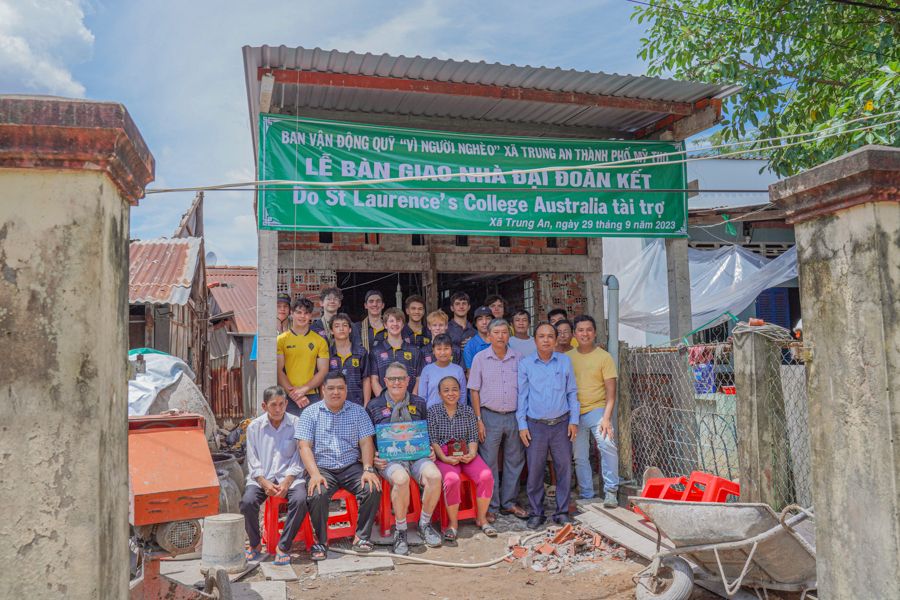
At a surface level, these projects involve building or improving small-scale community infrastructure — housing for low-income families, school facilities, playgrounds, or shared community spaces.
In practice, the experience is less about the final output, and more about how students engage with the process.
What students actually do
Students typically take part in hands-on work alongside local workers and residents.
This can include:
-
basic construction tasks
-
material handling
-
site preparation
-
supporting skilled labor
The level of involvement varies. Some groups are more physically engaged, others take on a lighter supporting role depending on age, fitness, and experience.
Programs usually run between 5 to 15 days, with only part of that time spent on the project itself.
Who actually leads the work
One thing that becomes clear quickly is that students are not leading the project.
Local partners — builders, community members, and organizers — make the decisions. They determine what is built, how it is done, and how the work progresses.
Students participate within that structure.
This often challenges initial expectations, especially for groups used to thinking in terms of “impact” or “ownership.”
Constraints that shape the experience
There are several practical constraints that influence how these projects unfold.
Time is the most obvious one. In a short program, the direct contribution students make is limited.
Skill and physical capacity also matter. Most students are not trained for manual labor, and fatigue becomes a factor after a few days.
Communication can be uneven. Language barriers and different working styles mean instructions are not always clear, and coordination takes effort.
These are not side issues. They are part of the experience.
Why the Mekong Delta works for this
The Mekong Delta is used not because it is “ideal,” but because it is practical.
It is close to Ho Chi Minh City, making logistics manageable. Materials, local partners, and site access can be coordinated without excessive travel.
At the same time, the region has a high density of communities where small-scale infrastructure projects are relevant.
Beyond the project itself, the Delta also offers exposure to daily life — food systems, local economies, and community structures — within a relatively short timeframe.
This combination makes it possible to integrate service work with broader cultural and social context.
What students experience over time
The student response is rarely linear.
Most groups start with excitement. The idea of contributing to a real project feels clear at the beginning.
After a few days, hesitation tends to appear.
The work is repetitive. Progress feels slow. Questions come up about how meaningful their contribution actually is.
This phase is important.
Students begin to confront the gap between expectation and reality — between the idea of “helping” and the limits of what they can do.
As they move through that, a different kind of outcome starts to take shape.
What tends to stay with them
By the later stages of the program, many students shift again.
Not because the project suddenly becomes larger in impact, but because their relationship to the work changes.
They become more comfortable with discomfort, more aware of their own limitations, and more attentive to how others work and live.
The sense of accomplishment is usually tied to this shift — doing something they did not expect to be able to do, rather than the scale of what was built.
What this kind of program actually offers
Service learning in the Mekong Delta does not produce large, measurable outcomes within a short timeframe.
Its value lies elsewhere.
It places students in a situation where:
-
they are not in control
-
they are working within constraints
-
they have to reassess what “contribution” means
For some groups, this is exactly what they are looking for.
For others, it may not align with their expectations.
That distinction is worth being clear about before the program begins.
More latest news

Festivals in Vietnam as a learning context for school trips
Festivals are not just cultural experiences in school trips to Vietnam. They are contexts where students engage with real-world systems, uncertainty, and collective behavior in ways that structured programs cannot replicate.
Read more…
Culture exchange on school trips: what actually makes it meaningful
Culture exchange is a central goal of many school trips, but meaningful understanding does not automatically follow. This article looks at why most exchange remains surface-level, and what changes when students are able to interpret what they experience.
Read more…