Ben Tre in the Mekong Delta: from field trip experience to environmental learning
In Mekong Delta school trips, Ben Tre is often included as a field-based segment where environmental issues can be observed directly, rather than explained in the classroom.
Known for its coconut groves and river networks, Ben Tre appears at first as a fertile agricultural region. But beneath this landscape, environmental changes are gradually reshaping how the region functions — in ways that are not always immediately visible.
This is what gives Ben Tre its role within experiential learning programs.
A landscape shaped by water and agriculture
Located within the Mekong Delta’s dense river system, Ben Tre has long been associated with coconut farming and orchard-based livelihoods.
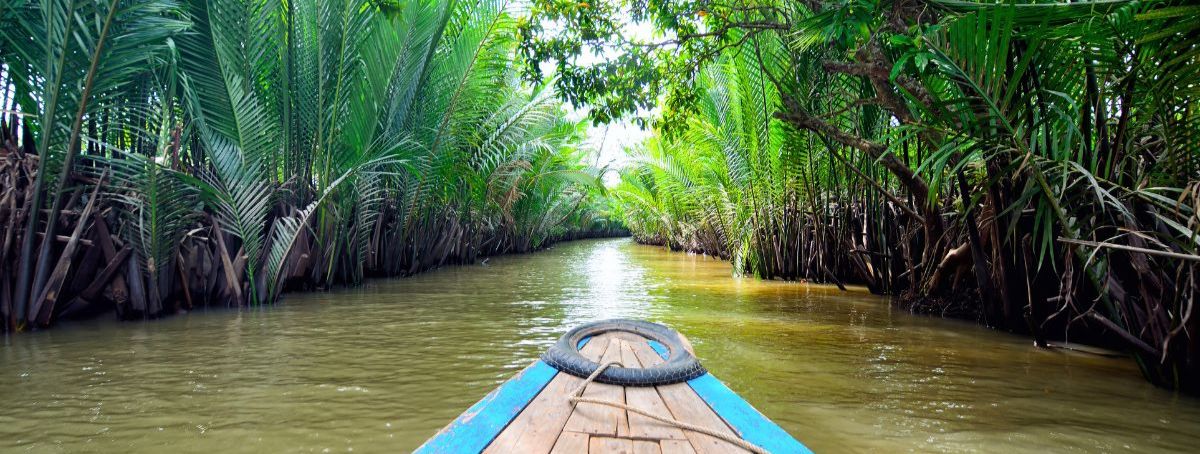
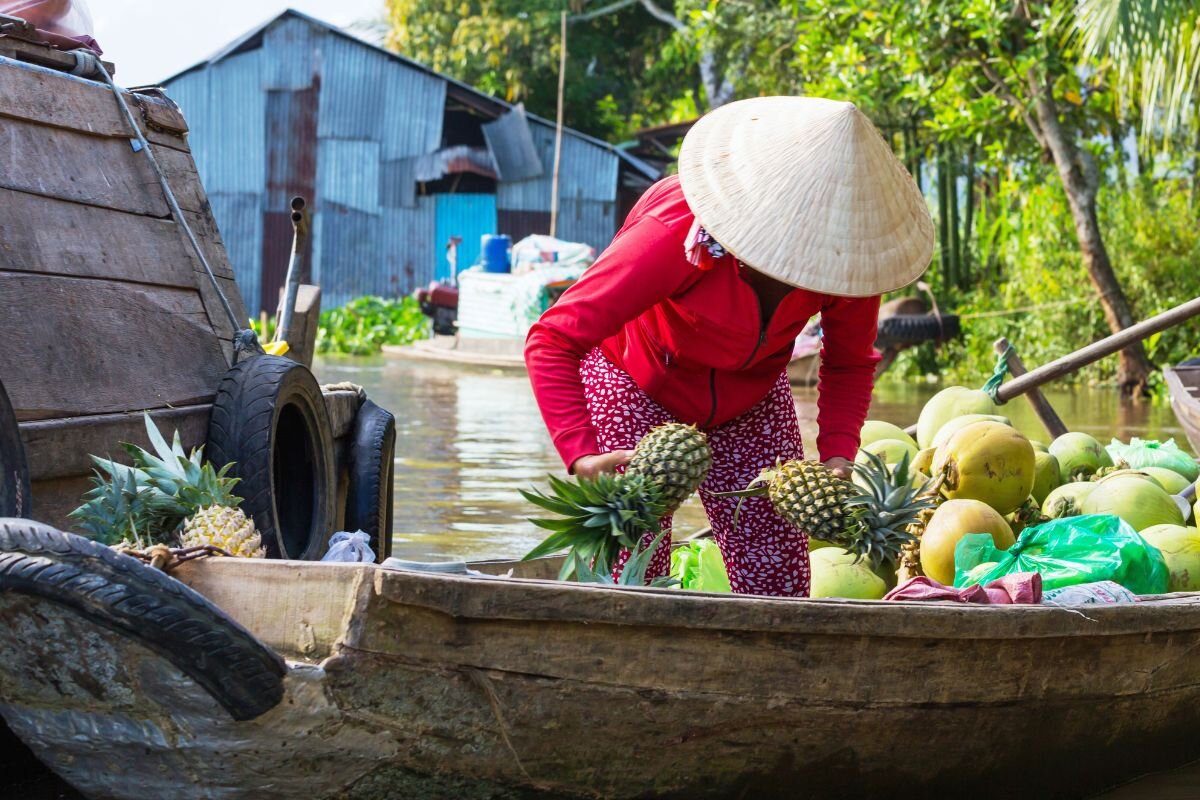
Daily life follows the rhythm of the water. Small boats move along canals, farmers tend to orchards, and communities rely closely on natural resources. For many students, this setting is initially understood as a productive, tropical landscape.
But this surface-level reading does not hold for long.
Environmental changes in context
In recent years, Ben Tre — along with the wider Mekong Delta — has been increasingly affected by environmental pressures.
One of the most significant is saltwater intrusion, where seawater moves inland through river systems. For a region dependent on freshwater, this creates practical challenges: crop yields are affected, water availability becomes less predictable, and farming practices need to adapt.
At the same time, mangrove ecosystems, which act as natural coastal protection, are under pressure. Their decline has implications not only for biodiversity, but also for livelihoods and long-term environmental stability.
These are not abstract issues. They are conditions that shape how people live and work in the region.
When environmental concepts become visible
For many students, terms such as “climate change” or “biodiversity loss” are familiar but distant.
Field-based experiences in Ben Tre change that relationship.
Instead of learning through explanation, students encounter how environmental systems operate through everyday life. They may observe how water conditions affect agriculture, hear local accounts of seasonal changes, or see how communities adjust to shifting conditions.
The concepts remain the same. What changes is their visibility.
From local systems to global connections
Ben Tre also provides a way to connect local environments to broader systems.
The Mekong Delta plays a significant role in regional and global food supply. Changes in this landscape extend beyond the local context, influencing production, trade, and ecological balance.
Understanding this connection helps frame environmental issues not as isolated events, but as part of larger, interconnected systems.
How Ben Tre fits into a school trip
In most programs, Ben Tre is part of a short Mekong Delta segment, typically over one or two days.
Compared to urban stops, the pace is slower and more locally grounded. Activities tend to focus on observation — moving through waterways, visiting orchards, and interacting with communities — rather than covering multiple sites.
These experiences are also dependent on timing, water conditions, and local access, which makes planning an important part of how the learning unfolds.
What students take away
Not every student leaves with a defined project or initiative. In some cases, the experience carries forward into school-based work. In others, it remains as a reference point — a moment where environmental issues became more tangible than before.
What Ben Tre offers is not a single outcome, but a shift in how students understand the relationship between environment, livelihood, and change.
And within a Mekong Delta school trip, that shift often becomes one of the more grounded forms of learning — because it is built on what students have seen, rather than what they have been told.