Tra Vinh in Mekong Delta school trips — agriculture, community, and everyday systems
In Mekong Delta school trips, not all locations serve the same purpose.
Some places offer clear historical narratives. Others provide access to environmental systems. Tra Vinh tends to sit somewhere in between — a setting where agriculture, community life, and cultural diversity intersect in everyday ways.
For students, this is not a place of major landmarks. It is a place where patterns become visible.
Observing agriculture as a system, not an activity
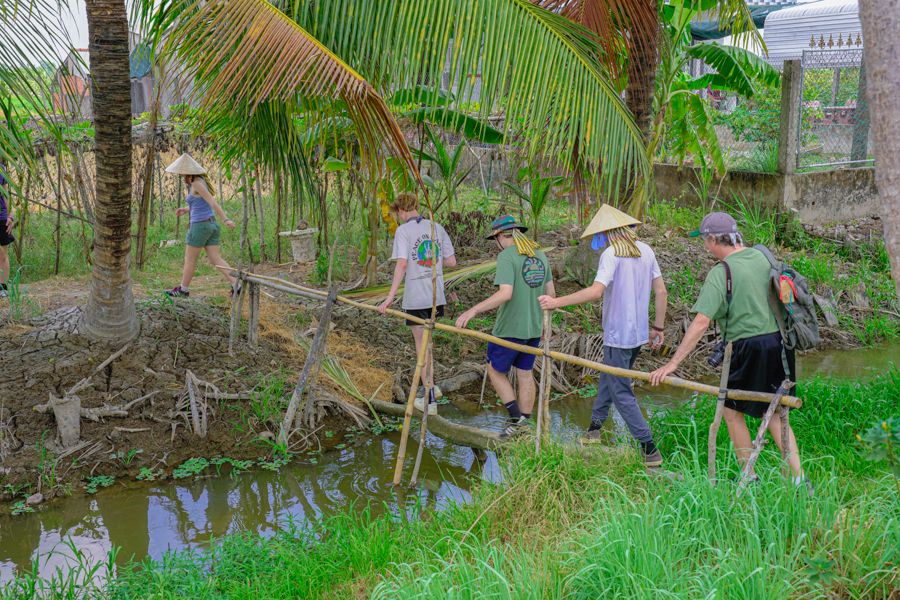
In Tra Vinh, agriculture is not presented as a demonstration. It is part of daily life.
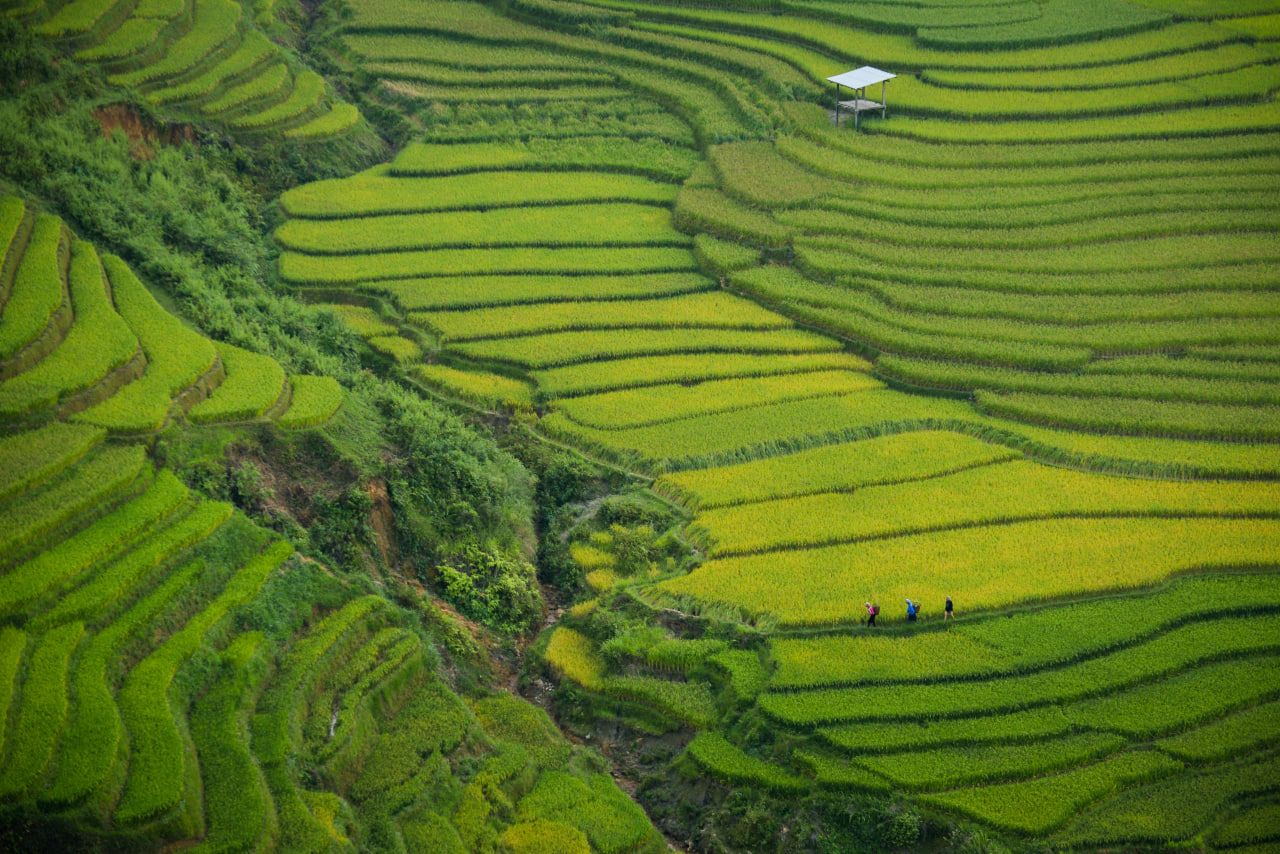
Students visiting orchards or small farms do not simply “learn about farming.” They observe how production is shaped by seasonal cycles — rainy and dry periods that determine what can be grown and when.
Rather than maximizing output, many practices follow a different logic: working within environmental limits. Crops are grown according to conditions, not forced against them. This can mean lower short-term returns, but greater long-term stability.
For students, this raises a different question. Instead of asking how to increase production, they begin to consider how systems are sustained over time.
Environmental constraints in everyday life
Like other parts of the Mekong Delta, Tra Vinh is affected by saltwater intrusion and changing environmental conditions.
Mangrove systems along the coast function as a protective layer, reducing erosion and stabilizing habitats. But their role is not only ecological. It is also social.
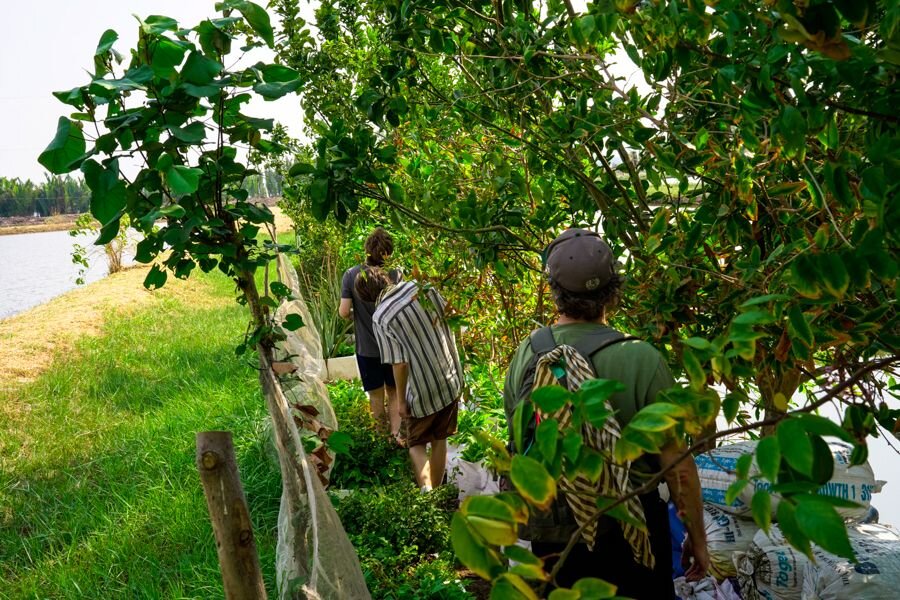
Local communities participate in maintaining these systems — planting, protecting, and adapting their livelihoods around them. Environmental knowledge is not separate from daily life; it is formed through practice.
For students, this shifts environmental issues from abstract problems to lived conditions.
Cultural diversity as a lived structure
Tra Vinh is home to three main communities: Khmer, Kinh, and Hoa.
This diversity is not staged or separated. It appears in language, food, architecture, and daily interaction. Students may hear multiple languages spoken in the same space, or see cultural practices overlap rather than remain distinct.
Rather than observing culture as a fixed identity, they encounter it as something negotiated in everyday life.
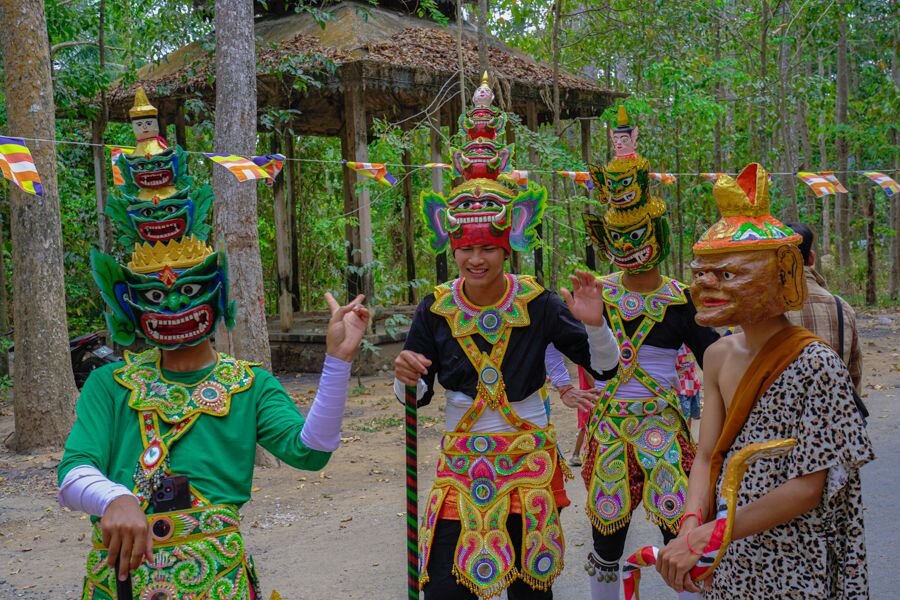
Participation in local settings — including Khmer cultural events — allows students to move beyond observation. They are not only watching, but entering a space where relationships, roles, and meanings already exist.
What makes Tra Vinh different within a school trip
In most Mekong Delta programs, Tra Vinh is not a highlight destination in the traditional sense.
It is typically included as a quieter segment, often within one or two days, where the pace slows and the focus shifts from visiting to observing.
Compared to more structured activities, the value here lies in continuity. Agriculture, environment, and culture are not presented separately — they are experienced together, as part of the same system.
What students take away
Not every moment in Tra Vinh is immediately striking.
But over time, patterns emerge.
Students begin to notice how environmental limits shape decisions, how communities adapt to change, and how different cultural groups coexist within the same space.
These are not lessons delivered directly. They are observations that accumulate.
A place where systems remain visible
Tra Vinh does not simplify the Mekong Delta. It reflects it.
Agriculture follows seasonal constraints. Environmental protection depends on local participation. Cultural identity exists within shared space rather than isolation.
For students, this creates a different kind of learning.
Instead of being told how systems work, they begin to see how those systems hold together — and what happens when they are under pressure.
That is where Tra Vinh becomes meaningful within a school trip: not as a destination to visit, but as a context where everyday systems can still be observed in full.