Beyond the Gradebook: What Experiences Do Students Truly Need to Thrive?
The world is changing faster than we can adapt. As technology evolves and global issues grow increasingly complex, a critical question arises: Is a stellar transcript still enough to define a person’s growth?
Today, a student - a young person learning to navigate adulthood - needs more than just facts; they need depth, flexibility, and a genuine connection to the world around them. Growth is no longer just about deepening knowledge; it is about expanding experiences and perspectives. Often, an educational journey through Vietnam is exactly where that transformation begins.
From "Answering Right" to "Asking Why"
In a traditional classroom, providing the correct answer is the ultimate achievement. However, over-reliance on this model can lead to passive learning. True curiosity only awakens when students step outside their comfort zones.
Imagine standing in the middle of the Imperial City of Hue. Faced with ancient architecture and echoes of the past, a student doesn’t just recite dates - they begin to wonder: "How did power actually function in this dynasty? What were the catalysts of its decline?" These questions don't come from textbooks; they come from immersion. The most profound learning happens when students stop waiting for the answer and start seeking it themselves.
Adapting to the Real World
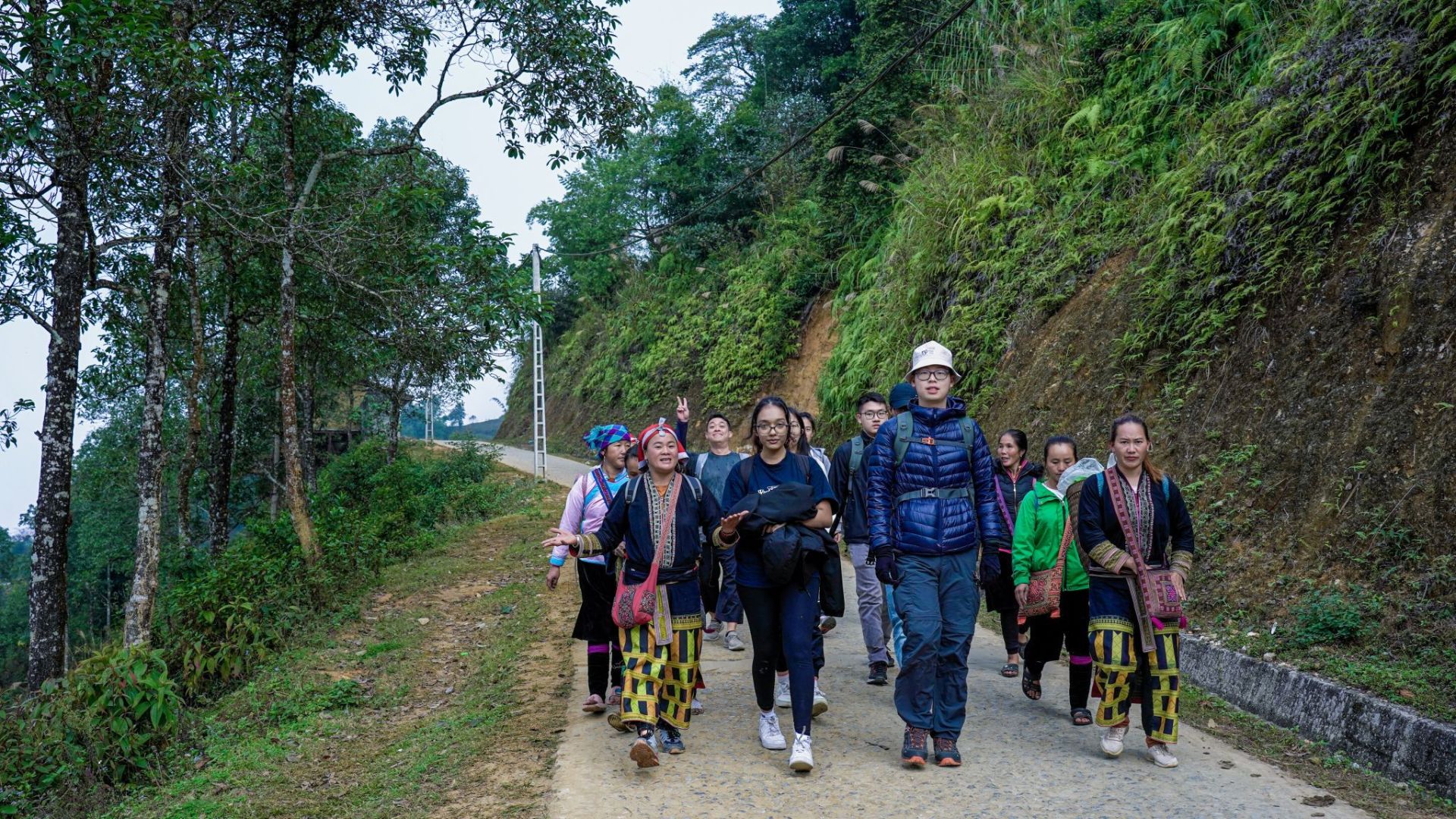
The real world is beautiful, but it is also unpredictable and constantly shifting. If students remain confined to their "familiar zones," they struggle to understand how the world actually functions. On an educational trek through Vietnam, we encourage students to master the simple challenges:
- Navigating a street through a sea of motorbikes.
- Ordering a meal in an unfamiliar language.
- Managing unexpected hiccups during their journey.
These moments build adaptability, confidence, and proactivity. Beyond these skills, students become more socially conscious and grounded than ever before.
Understanding the World as a Connected System
In school, subjects like history, geography, biology, and math are often taught in silos - separate and disconnected. In reality, the world functions as an integrated web where one element’s growth depends on another’s foundation.
In the Mekong Delta, for instance, students can observe firsthand how:
- Agriculture is dictated by topography and climate.
- Farming techniques must adapt to climate change.
- History and culture shape modern economic development.
The realization is powerful: Everything is a unified system. Students begin to see themselves as vital components of their own systems—their families, their classrooms, and society at large. They learn the value of solidarity and gain the analytical insight to see that everything in this world has a root, a cause, and a connection.
At SciVi Travel, we don’t just design trips; we design turning points in a student's growth. Let Vietnam become the most vivid textbook they have ever read.