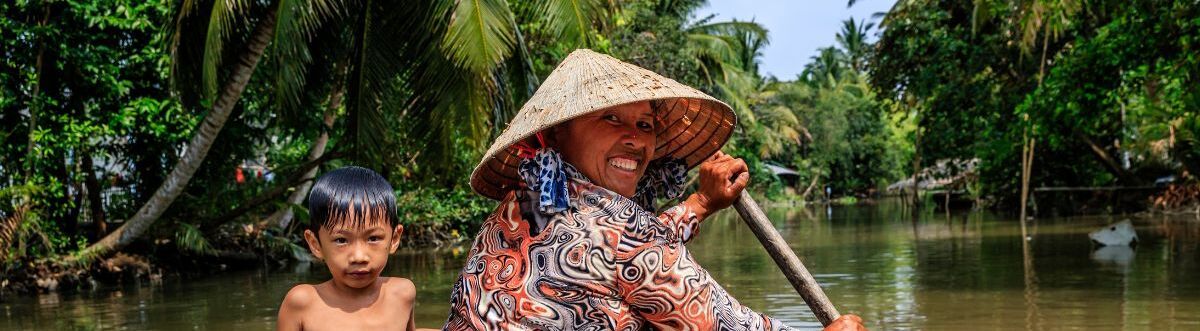
Learning the SDGs through real-world experiences in Ben Tre’s eco-sites
Experiencing the SDGs in Mekong Delta school trips — sustainability in practice
In many classrooms, the Sustainable Development Goals (SDGs) are introduced as a set of global priorities — clearly defined and widely applicable.
But their meaning is not always easy to grasp in practice.
In Mekong Delta school trips, these same ideas take a different form. Instead of being explained, they are encountered through environments where ecological systems, livelihoods, and daily decisions are closely connected.
This is where sustainability becomes more visible — not as a framework, but as something that shapes how people live and work.
A delta shaped by water and adaptation
The Mekong Delta is built on a dense network of rivers, estuaries, and alluvial land. Water determines what can be grown, how people move, and how communities organize their livelihoods.
At the same time, it introduces constraints. Seasonal shifts, salinity changes, and coastal pressures require constant adjustment.
These are not isolated environmental issues. They are conditions that influence everyday life.
For students, this landscape provides a starting point — a place where environmental systems are not abstract, but observable.
When sustainability moves beyond theory
Concepts such as climate change, biodiversity, or responsible resource use are often familiar, but distant.
Field-based experiences in the Mekong Delta change that relationship.
Instead of asking what sustainability means in theory, students begin by observing how it operates in practice:
-
how water conditions affect agriculture
-
how ecosystems support or limit livelihoods
-
how communities adapt to environmental change
The concepts themselves do not change. What changes is their visibility.
A closer look from Bến Tre: when systems are held together
Within the Mekong Delta, provinces like Bến Tre offer a more focused view of how these systems function under pressure.
Located toward the coastal edge of the delta, Bến Tre is shaped by tidal flows, mangrove ecosystems, and agricultural land that depends on both freshwater and saline conditions. This creates a landscape where environmental change is not theoretical — it directly affects how people sustain their livelihoods.
One example is a local initiative known as Người Giữ Rừng (“The Forest Keeper”).
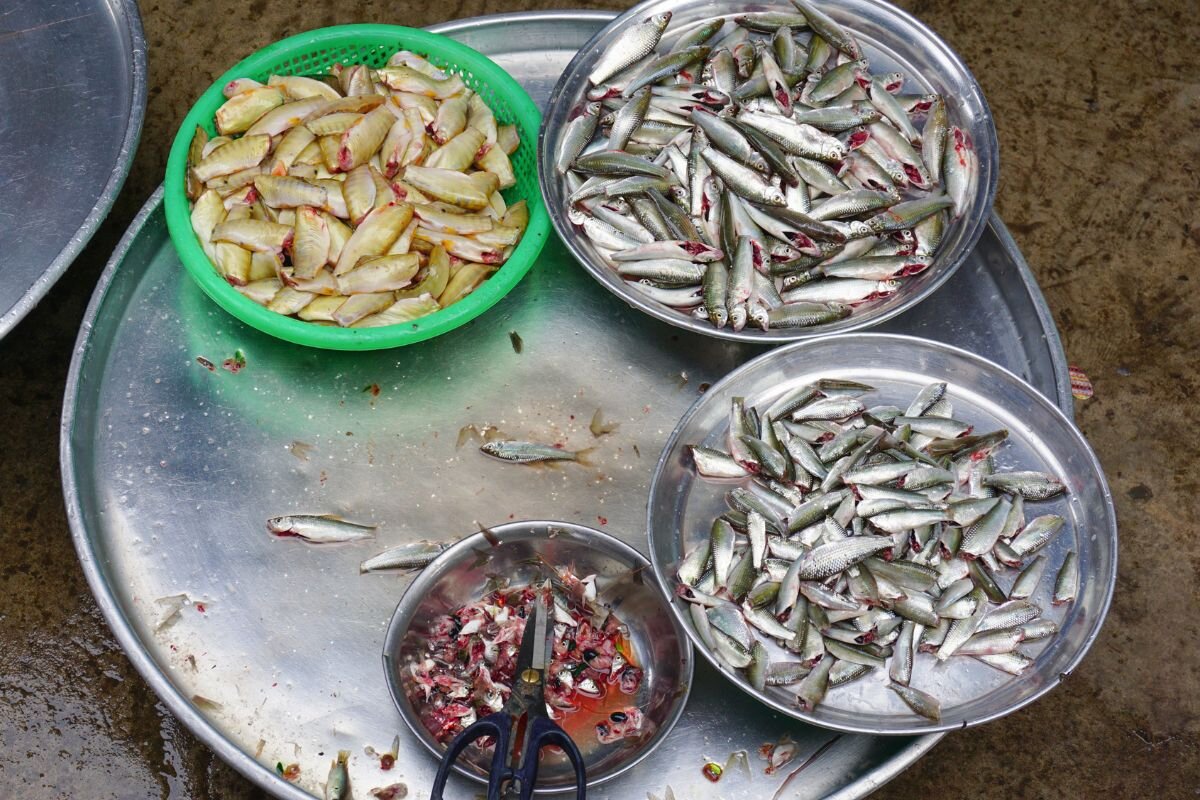
Rather than operating as a conservation site in isolation, it functions as a livelihood model built around the mangrove ecosystem. Local households raise shrimp, crabs, and other aquatic species under the forest canopy, relying on natural tidal flows and the health of the surrounding environment.
In this system, the mangrove forest is not protected by excluding human activity, but by making it economically relevant. The roots stabilize coastal soil, regulate water conditions, and support the ecological balance that aquaculture depends on.
When the forest degrades, the system weakens. When it is maintained, both the ecosystem and local income can be sustained.
For students, this reframes sustainability. It is no longer a choice between development and conservation, but an ongoing balance shaped by environmental conditions and economic needs.
Connecting local systems to global frameworks
What happens in the Mekong Delta does not remain local.
The region contributes significantly to broader food systems. Changes in water conditions, ecosystem health, or agricultural output can influence supply chains and environmental stability beyond the delta itself.
Understanding this connection allows students to see how local environments are linked to global systems.
In this context, the SDGs become less about global ambition and more about how different systems interact — environment, economy, and society.
How this fits into a school trip
In most programs, the Mekong Delta — including areas like Bến Tre — is visited over one or two days within a broader itinerary.
Compared to urban destinations, the pace is slower and more observational. Activities typically involve moving through waterways, visiting agricultural or coastal areas, and engaging with local communities.
These experiences are also shaped by practical conditions — timing, water levels, weather, and accessibility — which influence what students are able to observe.
Planning, in this sense, is not only logistical. It shapes what learning becomes possible.
What students take away
Not every student leaves with a defined outcome.
In some cases, the experience carries forward into school-based work. In others, it remains as a reference point — a moment where environmental issues became more tangible than before.
What matters is a shift in perspective.
Students begin to see sustainability not as a distant set of goals, but as something negotiated daily — shaped by constraints, trade-offs, and the need to maintain balance within a living system.
A different way of understanding sustainability
Mekong Delta school trips do not simplify environmental issues. They make them more complex.
But that complexity is where their value lies.
Instead of being told what sustainability looks like, students encounter it in situations where no single solution is obvious — only a system that needs to be understood and maintained over time.
And in that process, the SDGs move from being abstract goals to something more practical: a way of understanding how systems hold together — and what happens when they don’t.