Mekong Delta: Climate Change and Connected Systems
This program is structured as a field-based study of climate change in southern Vietnam, with the Mekong Delta as its primary setting. Rather than approaching climate as a standalone topic, the program works through how environmental conditions interact with local economies, agricultural systems, and community life.
Activities and site visits follow an existing operational structure, but are used as entry points for observation, discussion, and comparison rather than as standalone experiences. Ho Chi Minh City provides an additional layer through urban, historical, and cultural contexts that sit alongside the environmental focus of the delta.
A field-based program centered on the Mekong Delta, examining how climate change is experienced across environmental, economic, and community systems.
For faculty working in environmental studies, development, geography, or interdisciplinary climate-related fields.
How the field is used
Environmental systems
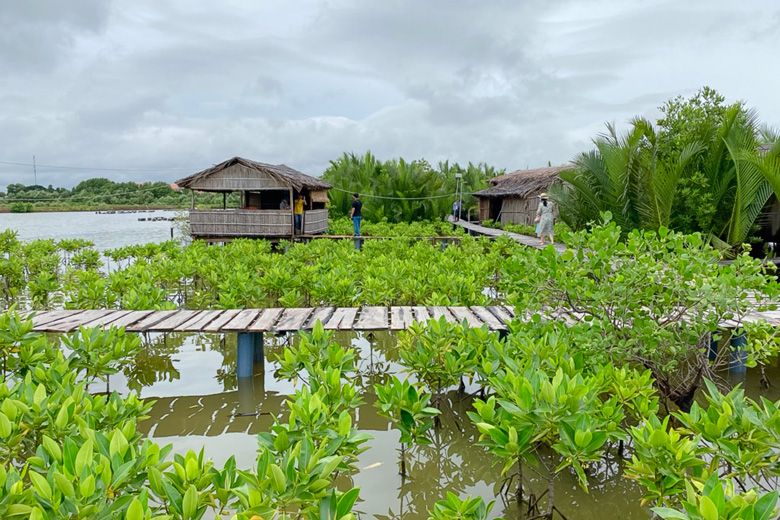
Work within coastal and agricultural environments where climate adaptation is ongoing, including mangrove ecosystems, aquaculture, and farming practices.
Livelihoods and local economies
Observe how production, trade, and community-based economic activities operate, and how they respond to environmental and market pressures.
Participatory components
Take part in selected activities alongside local practitioners, providing a point of entry into how systems are managed in practice.
Cultural and historical contexts
Engage with cultural practices and historical sites in Ho Chi Minh City, offering additional perspectives on how social systems persist or shift over time.
How different locations contribute
Mekong Delta
The primary field setting, where environmental conditions, agricultural systems, and local livelihoods can be observed together.
Tra Vinh & surrounding areas
Focus on coastal ecosystems, mangrove restoration, and community-level responses to environmental change.
Can Tho
Extends the view to regional economic systems, trade flows, and how agricultural production connects to broader markets.
Ho Chi Minh City
Provides an urban and historical layer, where cultural practices and past events offer additional context alongside the environmental focus.
Supporting field-based learning
Faculty retain academic direction over the program, including how the field is framed and discussed. Our role is to support the operational side — coordinating logistics, site access, and local engagement — so that the field can be used effectively within the course.
Next step
If you are exploring a field component focused on climate and environmental systems, we can adapt this structure to your course. Start the conversation or email [email protected].
Want a customized tours that fits your organization’s need? Talk to us now!
Or drop us a line at [email protected]