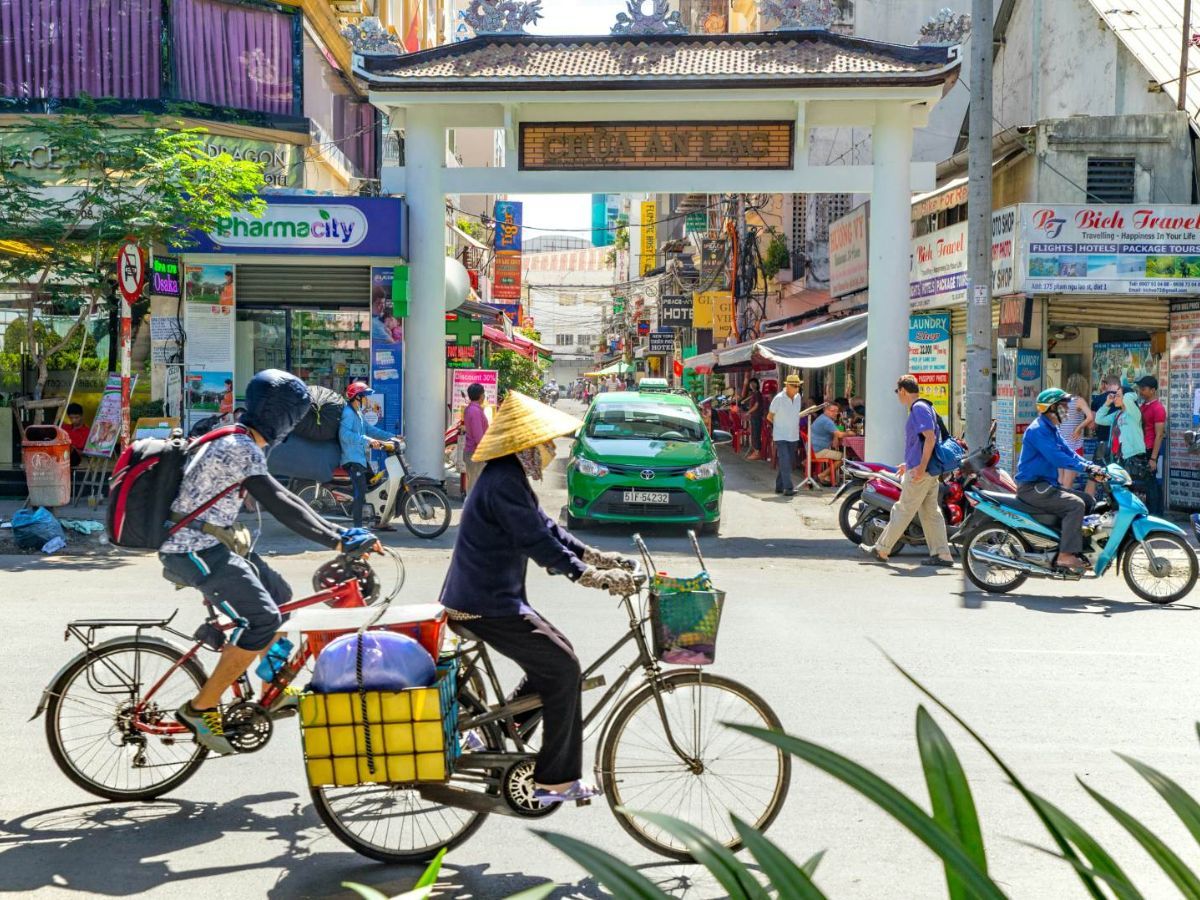
Vietnam: Regional Life in an Emerging Context
Vietnam: Regional Life in an Emerging Context approaches Vietnam as a country where different social, economic, cultural, and environmental systems develop at different speeds. Rather than presenting regional diversity as a general cultural theme, the program uses movement from north to center to south to examine how ways of life vary across geography, history, urban form, and everyday practice.
The route works as a comparative field structure. Hanoi, Ninh Binh, Ha Long, Hoi An, Hue, Ho Chi Minh City, and the Mekong Delta are not treated as a checklist of sites, but as different settings where students can observe how local conditions shape the way people live, move, trade, remember, work, and adapt.
Different academic angles this route can support
The value of this route is not simply that it covers multiple regions. It gives faculty a way to compare how different parts of Vietnam hold together different relationships between place, economy, memory, culture, and daily life.
Development and uneven change
The route can be used to examine how development appears differently across capital cities, smaller towns, heritage sites, river environments, and major urban centers.
Regional comparison
Northern, central, and southern Vietnam provide different settings for comparing rhythm, landscape, public space, foodways, local economies, and inherited cultural forms.
Urban and rural systems
Students encounter both dense urban settings and slower rural or river-based environments, allowing discussion around how systems of work, movement, trade, and community life vary by place.
Culture as everyday practice
Food, markets, craft, religious spaces, and local movement are treated as ways into social life, rather than as isolated cultural activities.
Landscape and environment
Karst landscapes, waterways, cities, and the Mekong Delta can be used to discuss how environment shapes settlement, mobility, livelihood, and regional identity.
Interdisciplinary area studies
The program is especially useful when Vietnam is approached not through one discipline alone, but as a layered case where history, economy, culture, and environment need to be read together.
How the regional comparison unfolds
Northern Vietnam
Hanoi, Ninh Binh, and Ha Long provide a starting frame through political history, religious landscapes, urban rhythm, waterways, and karst environments. This section can be used to introduce how state history, landscape, and everyday life sit alongside one another.
Central Vietnam
Hoi An and Hue shift the field toward trade history, craft, foodways, imperial memory, garden houses, and inherited forms of living. This section supports discussion around continuity, preservation, exchange, and regional identity.
Southern Vietnam
Ho Chi Minh City and the Mekong Delta move the program toward urban multiplicity, migration, trade, war memory, river systems, and southern forms of social and economic life. This final section helps students compare movement, commerce, and water-based environments with what they have seen earlier.
What students are asked to notice
Rhythm of daily life
How people move, eat, work, gather, trade, worship, and use public space across different urban and rural settings.
Built and natural environments
How architecture, waterways, agricultural landscapes, streets, markets, temples, and heritage spaces shape what daily life looks like in each region.
Foodways and local economies
How food, markets, workshops, and local production can be read as economic and cultural systems rather than as isolated experiences.
Continuity and change
How inherited practices, regional identities, and older landscapes persist, adapt, or sit beside newer forms of urban and economic life.
Questions faculty may want to clarify
Is the program mainly cultural, developmental, or comparative?
The same route can support different emphases. Some courses may focus on regional culture, while others may use the route to examine development, urban-rural contrast, or social change.
How much regional contrast is useful?
Because the program covers multiple parts of Vietnam, the academic value depends on how comparison is framed before and during the field component.
What role should participation play?
Cooking, workshops, cycling, boat travel, and food experiences work best when used as entry points into observation and discussion, not as activities detached from the course frame.
How should faculty balance breadth and depth?
This route is broad by design. It works best when faculty use the movement across regions to build comparison, rather than trying to cover each site exhaustively.
Supporting comparative field learning
Before the program
We clarify the academic emphasis of the route, including whether the program should foreground development, culture, regional comparison, urban-rural contrast, or interdisciplinary area studies.
In the field
We manage the multi-region movement, local coordination, pacing, transport, meals, and site access so faculty can focus on framing and discussion.
In practice
The route remains broad, but each location can be used intentionally as part of a larger comparison rather than as a standalone destination.
Interested in shaping this route for a faculty-led course?
We can adapt the regional structure around your course priorities, whether the emphasis is development, culture, geography, sociology, anthropology, or interdisciplinary area studies. Start the conversation, chat on WhatsApp, or email us at [email protected].
Want a customized tours that fits your organization’s need? Talk to us now!
Or drop us a line at [email protected]