
Teachers rarely ask the question directly: “Is Vietnam safe?”
Instead, it tends to surface through other concerns—questions about transportation, supervision ratios, or how unstructured time is managed. Underneath these is a more practical consideration: if something shifts during the trip, can the program still hold together—particularly in the context of a Vietnam school trip?
This is often where hesitation begins.
Compared to destinations like Japan or parts of Europe, Vietnam does not always feel immediately predictable. First impressions can be intense—traffic that appears to move without clear rules, sidewalks that double as shared public space, and a constant flow of activity that rarely pauses.
For teachers responsible for a group, that difference between expectation and on-the-ground reality is significant.
What becomes clearer over time, however, is that the system does function. It simply does not make its logic explicit. Movement is continuous, but not random; people adjust in real time, and the environment absorbs disruption rather than stopping for it.
Without local context, though, this is not something that can be easily interpreted or anticipated from a fixed plan.
Where things actually begin to slip is rarely where people expect.
In practice, programs rarely encounter problems in the ways people initially imagine. Breakdowns tend to be gradual rather than dramatic.
A morning in Hanoi, for example, may be scheduled too tightly, with the assumption of smooth transitions between sites. A vehicle cannot access a narrower street, so the group walks further than planned. Arrival times shift, the next activity is compressed, lunch is delayed, and by early afternoon students are already fatigued.
Nothing has gone wrong in a critical sense, but the structure of the day is no longer holding as intended.
This is often where a Vietnam school trip either maintains its flow or begins to drift—not because of major disruptions, but because small frictions are not absorbed.
What holds a program together
Programs that work well in this context tend to be structured differently. Schedules allow for genuine buffer, not simply unallocated time. Movement is planned with a clearer understanding of how cities function in practice.
There is also active, on-the-ground coordination—someone continuously adjusting timing, sequence, and logistics as conditions evolve.
Equally important, students are prepared for how to engage with the environment. Not through rigid instruction, but by building awareness of how to move through and respond to a setting that operates at a different pace.
Once that adjustment happens, what initially feels uncertain becomes more legible.
For schools that approach it this way, high school trips to Vietnam are not only manageable, but highly effective as learning experiences.
In this sense, the question of safety does not sit solely at the level of destination. It depends on how the program is designed, paced, and managed in response to that environment.
Vietnam does not remove variability. It just makes you deal with it.
If you’re working through what this looks like in practice, the structure of the itinerary tends to be where most of this gets decided.
We’ve broken that down here.

More latest news
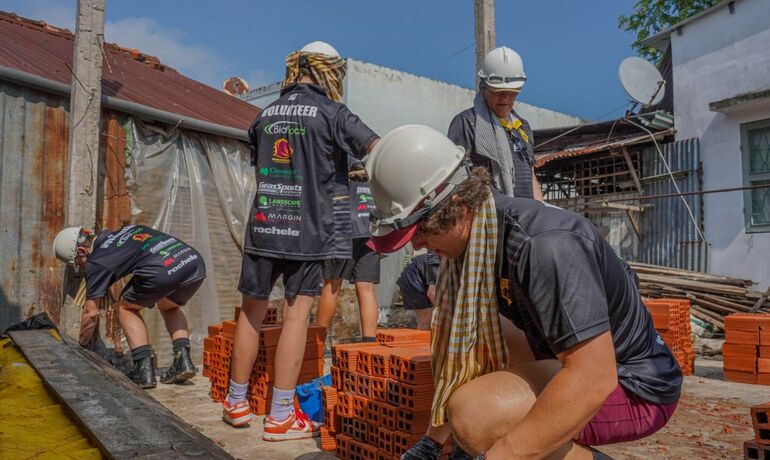
Vietnam School Group Tours & Service Learning Trips
Vietnam School Group Tours & Service Learning Trips Vietnam, a country of breathtaking landscapes, rich history, and diverse cultures, has become a sought-after destination for educational travel experiences. School group tours and service learning trips
Read more…
Ideas for School trip in Vietnam: Sapa and the North West
Sapa, a remote and enchanting destination nestled in the far northern reaches of Vietnam, presents a captivating landscape of rolling emerald hills, cascading waterfalls, and terraced rice fields that stretch into the horizon. This picturesque town,
Read more…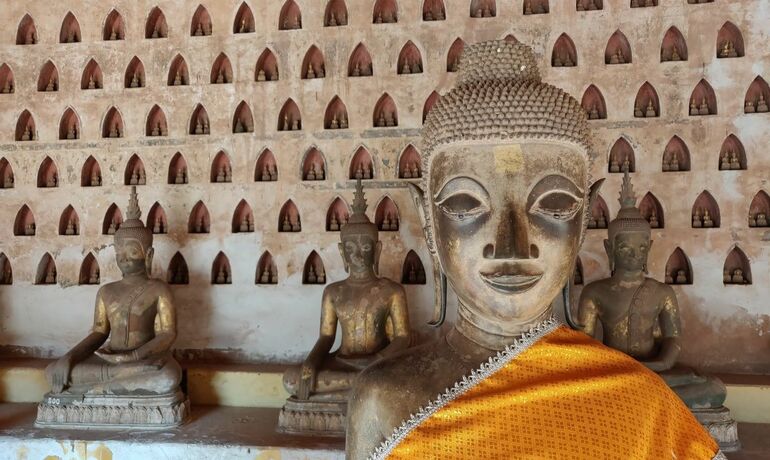
Exploring Educational Adventures - School Trips in Laos
Exploring Educational Adventures: School Trips in Laos Laos, a hidden gem in Southeast Asia, presents an incredible opportunity for educational school trips. This country boasts lush landscapes, serene temples, and a rich cultural heritage, making it an
Read more…